afraid of help? seek a supporter, maybe a champion

sometimes I am afraid of help, of asking for help, of being seeing to need help. my brain will tell me the following:  needing help is weakness. it’s showing lack. it’s deficiency. it’s vulnerability. it’s showing a soft underbelly. now someone will know that I don’t know it all, have it all. sometimes it’s not all self-contained and together in here. 

and that’s fine to feel afraid. fear is part of life. unfortunately. but we all need to find the right kind of help. not a “helper,” who is using help as a form of control or to externalize their own anxieties about you or about failure or about whatever is going on in their brainscape. and not an I-told-you-so-er. definitely not one of those. but a supporter. the person who comes in and stands beside you, solid, so you can lean as much as you need for as long as you need, and when you’re okay – you’re rested, recovered, reset – the supporter moves out of that position into their usual place in your life. they are back to spouse, friend, cousin, neighbor, co-worker. and you don’t feel like you did something wrong to ask for help. the soft underbelly might be one of their favorite parts of you, in fact. the supporter is there to support. and that’s that. 

sometimes the supporter turns out to be a champion. they are just as excited as you are that you are trying something new – taking a risk, being vulnerable and brave. and with each attempt they are solid. your success or failure doesn’t flag their enthusiasm for your enthusiasm. they want to hear your stories of your attempts. they want to revel in the wins and sympathize with the mistakes. and it’s even more special to me if that supporter-turned-champion is an expert at the thing I am just trying out. there is a magic there – and it took me a long while to really allow and then feel that magic. 

when an expert admires your first clumsy attempts at the thing they love and know so well. it’s like time folds backwards on itself and they are back at their starting line again, seeing their own beginning steps through your beginner’s eyes. they are seeing it all anew and loving it all again for the first time. your success becomes their success. they are suggesting and supporting out of love. because you are falling in love with their love, and it’s so exciting and beautiful. the help and support and encouragement is real and deep and sincere because they know. they were there a long time ago, taking their first steps just like you are, and they loved it then and they love it now and they want you to be great at it too and love it as much as they do. and nobody says those words aloud. but I feel it when a supporter becomes a champion, my champion. even for a moment. 

i’ve felt it for my students they’ve written something beautiful, questioned deeply, lost themselves in a book. I feel awake through their awakeness. and I’ve felt the same when a champion has seen my beginner’s efforts and it lights them up. they are alive in the process and the trying and the growing. the champion is seeing me sing my seeds awake, and they are stepping in to create the harmonies. it’s an inspiration loop. a love loop. for the thing we are working so hard to do, for being in the moment with it, fully immersed. in the truest sense of the word, it is wonderful. 

so yes, it is hard to ask for help from people who will help begrudgingly or anxiously or scoldingly. and it’s a moment of miracle when a champion steps forward to support. and when it happens to you, be soft. allow it. let it in. it can be beautiful for both of you.  

sometimes heaven is

just there

behind a golden sunset cloud

in the palm of your

gently outstretched hand

among us on a bright blue

day only sun

with us in 

the soil below our feet

– we are forgetful because of 

shoes and hurry to be on time –

in the juice of a succulent

fruit 

your choice

they’re all a good choice

in a breath of air a sigh 

of quiet

wrapped in a laugh your round

and sparkling laugh

sometimes it’s 

here 

sometimes

it’s you

who are you in the apocalypse?

okay, so maybe apocalypse is too strong of a word. I googoo’d it and I don’t mean it Biblically, I mean it like a zombie apocalypse, or like that M Night Shyamalan movie The Happening where a phenomenon occurs that threatens the survival of humanity. so in that case, who would you be? 

I know one person who said they’d just want to die early on, so they don’t have to deal with the fallout and the struggle to survive. because, according to this person, what would be the point of trying to make it in the after times? I can see what they mean. if the grid goes down and there’s no air conditioning and there’s no internet then why carry on living. that said, boring. also, in a way we are living in an after time. I know many many (many) of us want to forget that we went through a prolonged global end time – dealt with uncertainty, fear, isolation, grief, death, illness that went away and sometimes stayed for a long time – but we did do that. we are in an end time, though a forgotten one. 

that said, if you could control the situation a little, at least in your imagination, who would you want to be? what character, what role would you want to play? one of protectors fighting against the threat? a crafty bandit terrorizing the countryside and looting all that traversed your territory? the scientist? a soothsayer? a farmer? a cowboy?

me, I want to be a retired warrior, living down an out-of-the-way, nearly forgotten country road. I’ve concluded a life of combat to live quietly with my animals and plants and books. I sometimes wake up from dreams in a hot sweat, but I can quiet that part of myself when I float in the cool pond nearby or put my feet in the flowing stream on my periodic hunts for winter meat. I would be skilled and storied but only use my skills to protect and provide for myself and my farm, and my stories a guide for my decisions in the present. and maybe. maybe one day a band of adventurers, brave ones, stumble onto my land and I can invite them to pitch their tents outside my home and rest, share supplies and necessary wisdom with them before they continue on. maybe they would ask me to join them and maybe I would consider it. does the old sage, the crone, have value outside of their homestead? 

so yep. that’s who I’d be. in the apocalypse. but maybe that’s who I want to be now. skilled, wise, self-sufficient, able to give but not defined by it, centered in nature. 

okay now it’s your turn. who would you be? 

on the process, from whenever in the past till 16 July 2025

do you also get the date wrong sometimes? like I thought 2024 as I write today’s date. does it mean anything? 

anyway. a recap. 

my creative process is slow and needs external deadlines, but deadlines that aren’t too stressful, because if they’re too stressful then I avoid it by cleaning out all the kitchen cabinets or – let’s be real – I freeze and start a new TV series with at least 4 seasons, and then I feel like a failure for not meeting those deadlines and then I remember that I’m the one who made those deadlines, so I can change them at any time because I make the rules around here, and if I make the rules then that’s great I can do what I want like go back to watching TV or napping and also no one’s watching and no one cares which is really sad I should feel bad about that, so what I should do is I should definitely go back to watching TV or napping and that’s sad so sad too. unless. unless I make a deadline. 

so that’s what that’s like in here sometimes. and you? 

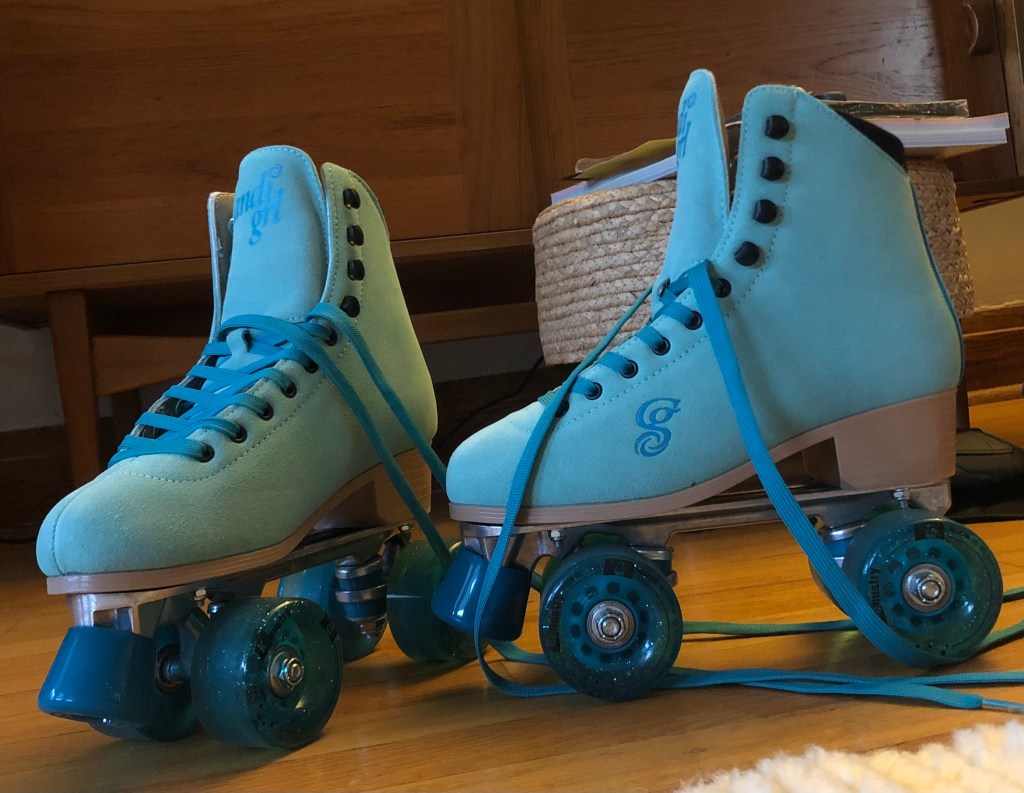
I know I am extremely hard on myself. and also fearful of making mistakes or being bad at something. but when I’m in it, I forget all about that and I’m in the joy of doing. like I just started roller skating and I don’t know how I look – maybe bad because of the people (men) at the roller rink checking in and trying to give me advice about how to do it – but when I’m doing it I don’t care how it looks. because it feels great. and same with doing any other creative thing – listing ideas, writing a poem, even writing this entry. I’m doing it. I’m doing it and I don’t care how it looks because how it feels is so much better. 

so I guess. I guess that’s the thing. chase the feeling of being, of being in it. turn the volume up all the way on that. and disregard the rest. 

Taking Things Apart

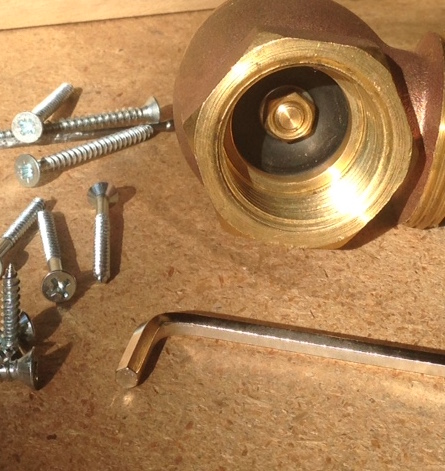
About two weeks ago, I came home from work to see my mom and wife preparing to take apart the pipes under the kitchen sink. The sink had been draining slowly for a few days and she had decided to call my mom, who knows a few things about home maintenance and repair, so that she could learn to do it herself. Three hours later, after a trip to the hardware store and a few breaks to just stare at the mess we’d made, the sink was put back together and draining just like it should. The process, though, was very uncomfortable for me. Partially because I didn’t know that The Kitchen Sink Project was going to happen, and partially because I feel very uncomfortable with taking things apart and making a mess.

In part some of my discomfort — that borders on dread — stems from my upbringing. And what better way to get to know myself and my childhood hardwiring than to throw myself into new or uncomfortable situations? My mom liked a very orderly, neat and clean house. And I don’t blame her:  she was a single mom with two kids and she had to go to whatever lengths she could to make sure we were clean, clothed, fed, and educated. As a result, keeping a tight schedule and an orderly home was the cornerstone of my childhood. Neat and orderly is generally a good thing, but sometimes there can be too much of it.

I remember as a kid, probably around 10 or 12, I felt inspired to draw, so went to take out some art materials. I opened up the cabinet and reached for the little plastic watercoloring set that we had had for years, but at the thought of having to control and then clean up the mess, I stopped myself. Rather than deal with the burdens of mess and clean up, I chose to avoid it. I chose to do something else instead. And that wasn’t the only time. As I grew up if I could do something cleaner, tighter, more contained, I chose that option. I systematically began to avoid messes, experimenting with materials, taking things apart, getting dirty.

IMG_3314

Odds and ends from the tool closet.

The philosophy of staying need, tidy, and contained continued at school, too. When it came to those typically messier, more hands-on subjects like art or science, my teachers trotted out the easiest possible options. Paper and pencil drawings in art, maybe occasionally something like paper mosaics with construction paper and glue. And for a real treat, drawing with oil pastels or chalk on paper. In science, work mostly revolved around textbooks — books we couldn’t even take home to read, because in middle school there was a set of 30 for about 90 of us. In fifth grade I got to dissect an owl pellet, but I think my teacher only got five or six, so we had to share in groups of five or six. For me as a student, explorations meant looking on from a safe distance — from behind glass at a museum, by looking over my grandpa’s shoulder at his workbench, by wondering in my head and just leaving it at that. Maybe sometimes I’d look it up in a book.

And what does this mean? In part I see that it makes me really aware as a homeowner that I am uncomfortable with fixing things, with taking things apart, and making them work again. I’m afraid to make a mess. Partially because there’s the nuisance of cleaning up afterwards, but also because I’ve never really dealt with this kind of mess before. I haven’t had the chance to explore under someone else’s guidance. And as far as the house is concerned, I’m both child and adult as I begin this process of learning. I’m leaning how things work, I’m pushing myself to explore pieces and parts of the house and how things go together, I’m trying to build the belief in myself that if I take something apart I will have the know-how to put it back together again.

That experience with the sink was small, but empowering. With some perseverance, a little willingness to experiment, some coaching from my mom and encouragement from my wife, I did it — actually my wife and I did it. And afterwards I felt that click in my head, that particular part of my body and brain turn on and get excited. I felt the rush of doing something real for myself and my house. And as a teacher it made me want to bring that rush of excitement, that kind of learning experience, to my students.

IMG_3316

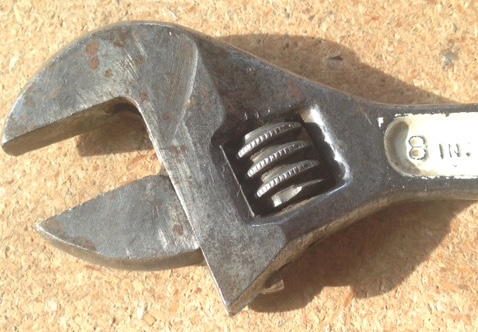
My grandpa’s tool, now mine.

Because truly, how often do they get to explore and play — and with something that can eventually become real and meaningful? Culturally I see that there’s a push for kids to be “college and career ready.” And as a teacher I believe in education. Of course. But the obsession with college and “good jobs” is, frankly, bullshit. We see that the most recent generation of young adults is deep in college loan debt, to the point of being paralyzed by it. And in many cases, I see that people don’t know how to do. Generally speaking, we don’t cook for ourselves very much, we don’t fix things for ourselves, we don’t make or manufacture things for ourselves. Because — didn’t you know? — that’s someone else’s job. Somewhere along the line of pushing our children to be college and career ready we began devaluing and distancing ourselves from the valuable work of taking things apart, fixing things, and making them work again. Which to me is one of the most real things a person can do. It’s a tangible example of our realness and our power in the world outside ourselves.

And as I get of taste of my own realness, my own power to fix and make things, I see that I’m starting to question things. I’m asking, how does this work? How is this put together? Why does it work like this? Is there some way to make this better? Where does this come from? Can I fix this? What can I do to change this? And if I’m asking these questions after fixing one little ole sink, what kind of questions would our kids start to ask themselves when they have a taste of a something similar?

And if I see that I have the power to question, to take things apart, to get messy, to put things back together in a way that makes them better — and to clean up the mess, too — then I see that I can be powerful in other ways, too. And when “powerful people” want to tell me that they’re right and I should fall in line, I can stand in the knowledge of my own power and push back. I know that I don’t have to avoid taking things apart or to making a mess. I know now that I have the power to fix it. And I want the same confident stance for my students and for the future adults of our planet.

IMG_3320

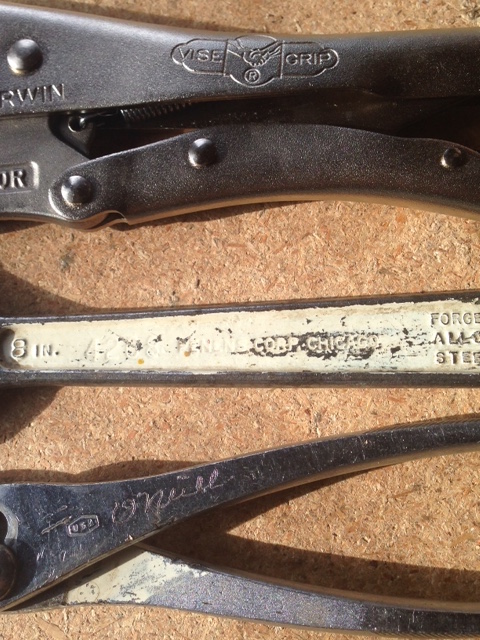
An assortment of inherited and newly purchased tools: vise grip, wrench, pliers.

There is beauty and power in being real, in being here  and doing things that are visible and tangible, things that concretely alter and improve the landscape of our lives. So let’s take things apart — from the humblest kitchen sink to the way we view ourselves and our places in the world. Let’s get messy and work on it together.

Was I that kid?

The classroom is most definitely a microcosm of society. Just like in “the real world” — also known as the world outside the classroom — there are moments of imbalance and injustice. What I’ve been struggling with and turning over in my head the last few weeks is what I can do about it, both as the adult in the room when I’m teaching and as a person in the world when I’m not.

Columbus Day just passed and I was going to say something about that, something about how it’s a bullshit day, that it should really be a day to honor the African Diaspora and the First Nations People rather than the conquerors. Then I was going to say something about facing the reality of our American culture, that many of the most “American” things emanate from non-white people and non-white places, ranging from the music we listen to to everyday technologies we take for granted.

But that statement alone wasn’t going to be enough; this nationwide, even worldwide negligence of balance, truth, and justice is part of it for me. It’s part of my slowly roiling frustration when I’m in the classroom this year. Another part of it is that now that I’m working with white kids — my first time in 11 years of teaching — I’m now seeing my biases up close on a daily basis and I’m seeing how extremely fucking sneaky they are, and worse yet, how little innocent white kids rely on them, base their entire stance in the world on them — and how adults like me perpetuate the cycle.

And so I arrive at a buffet of doubts and questions. Was I like these white kids when I was a kid? Did I take up so much space with my whiteness and the privileges it brings that I left no space for anyone else? Did my entitlement over-magnify me to the detriment of my peers? Did my implicit expectation that of course I’d win or get what I asked for or be chosen or go first take that experience away from someone else who was just as deserving — or more deserving? Did I just go through most of my life thinking I was a sweet girl in grammar school, friends with everyone, darling to all, while my classmates were just waiting for me to leave the room so they could finally breathe and take up some goddamn space?

I’d love to believe that I wasn’t like that. But maybe I was. Maybe I did take up that much space in the classroom, in the teacher’s psyche, in my classmates’ mental and emotional space. And with every inch I took, every time I raised my hand, answered a question, made some subtly domineering move in the classroom, my non-white peers got just that much less space for themselves, for their self-expression, for their self-exploration, for their risk-taking, for their leadership, for their ideas, for their questions, for their existence.

And there’s nothing I can do about it now, unfortunately, no way for me to go back and fix it, fix myself, teach my younger me how to not be an entitled jackass kid. But what can I do now? What can I do?

Well, I have to see this as my chance. I get to be a defender and a bridge and a guide all at once. My job is to guard the classroom space, keep it clear and open for all of my kids to lead, question, grow, take risks — to defend all of my kids’ rights to experience education, the act of learning and engaging and growing past their current boundaries. My job is to bring these kids together, bridge their differences, draw them close together and set up the expectation that they will always mingle, always integrate, always know one another, and always wish to know one another. My job is to guide them through rich and diverse materials, highlighting the beauty and value in everyone, in all of us, honoring our shared humanity. How exciting. How terrifying.

I acknowledge that I’m going to fail, and do it wrong, and forget myself and give in to something deeply coded into my brain. But I’m trying to push through my own shit to open up space and keep it open, one inch at a time.

Leadership is… (the kids version)

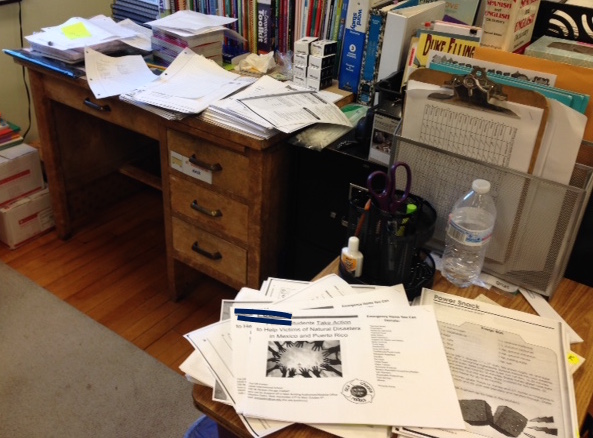
This entry is inspired by the way I found my classroom on Friday afternoon. I’d been out all day at a teacher leadership meeting, and returned to my building after hours to meet with my team. But before that, I stopped by my room — my home away from home — to reset a few things for Monday, and came upon a giant mess:  my desk overflowing with disorganized papers, pencils and facial tissues littering the floor, chairs strewn about the room, the morning message still left up on the board (eight hours later!!), a full newspaper stuffed into the teacher trash can, and a nearly untouched stack of assignments and activities that I had prepared the night before and left for the substitute teacher to lead the kids in doing. I can only imagine what they got up to all day. If only I could’ve been a fly on the wall.

52841864390__F554AFE8-E710-4B28-9061-008AFE5D3BCB

Exhibit A: The messy desk — I promise, I don’t leave it this way!

We’ve had many examples — interesting examples — of leadership in the news in the recent past. And many people have delved into those newsworthy examples, people who are better informed than I am, so I will leave that to them. But the classroom and the school setting are very often parallel worlds to what’s going on in the larger community — the citywide community, the statewide or national community, the global community — and that made me think about what I’m going to tell my students, my kids, on Monday. So humor me as I work through a draft of it here:

Based on the conditions I found in the room on Friday, I can make a few assumptions about what happened, how you behaved, and how your substitute teacher behaved. Some will blame the teacher for being a bad leader — in some ways I do — but I also put responsibility on you — all of you — for letting this happen. I know you are just children, only eight or nine years old, but your experience on Friday was an important lesson. And unfortunately you’re going to see as you grow up that the leaders who are meant to be in charge, to direct you and your daily activities, who are supposed to make decisions that are on your behalf, designed to benefit you — they will fail. And when you find yourself in that situation, you have choices.

One, let go and have fun. Don’t resist and follow along. And why not? It’s not your fault that the leader’s doing a bad job, making decisions that aren’t best for you or your community. It’s not your job, it’s someone else’s. And I understand. However, in those times you have other options, ones that are more powerful than that.

Once you realize that the leader, the person who’s supposed to be at the helm, driving the bus and choosing the path, isn’t making good decisions, then it’s up to you. Because you see what’s lacking, it is up to you — it is up to you — to take the lead. I’m not asking you to be defiant or disrespectful of the adult in the room, the leader of the classroom, but I am asking you to look around and think. Consider what would be best for you in this moment, and think about how you can bring others along with you into positive, respectful, and responsible choices. That’s a leader and that’s leadership. Start with the people nearest to you, and suggest that you all do something together — read, study, work on something as a group. If you can, spread out and visit other parts of the room, urge and encourage those friends to do the same. Stay optimistic, be persistent and positive, be flexible in your approach to the teacher and your classmates, show resilience and bounce back when you are ignored, and strive to do your best — even if the final, positive results are only with you. That’s being a leader.

And being a leader, a true leader, a sustainable and honorable leader, does not often lead from the helm, lifted up on a platform, dictating or bossing or threatening. Leaders are living and learning and moving among their friends, striving to be their best selves in all circumstances, welcoming their friends into better choices, searching for and magnifying their peers’ strengths, supporting and encouraging them through challenges, believing in them persistently — all the while with their eyes, their minds and their hearts set on creating a bond and a community among everyone, with mutual respect and responsibility as their goal.

So, we are going to take a step to the side today, to reinvest in one another and to plant the seed of leadership in our hearts — in each and every heart here in this classroom. We are going to build our community stronger by getting to know one another more deeply, by creating personal goals, sharing those goals, and pushing ourselves everyday this week to be on each other’s team, to encourage everyone to reach their goals and to be their best selves. Because if we can find that leader in ourselves, then we will always have a choice — no matter what may come — and we will know how to stay strong as individuals and as a community, and we will reach our goals no matter what.

i see you, i thank you, i love you

I just came home from a long visit with The Kids. Let me explain. I’m not a mother, but I’m a teacher. So in a way, I’m a part-time mother to many. In this specific case, The Kids are a family of four kids who are currently being taken care of by their grandmother, who they consider their mom. The full storyline is a little muddled and gray, but in general the gist is something like the mom was mentally and emotionally unstable, had four (or maybe five) kids within about six years, and through a series of abandonments and neglect, left them with her own mother to take over full custody and care for them.

I’ve come to know them — and love the shit out of them — through my wife, who was preschool teacher to the youngest two, the boys. Through a long series of conversations and events we saw that one of the boys was gifted, like truly gifted, and he qualified to attend the regional gifted program that’s housed in my school. Besides seeing them at school, we’ve gotten closer to them over the years, taking them out on the weekends and during the summer, attending their teacher conferences and meet the teacher nights, helping with school projects, all that.

And we just came home from a long visit with them. Unfortunately they’re struggling to deal with school and their emotions and how to treat one another and how to listen to their mom — essentially how to process and deal with their unfairly fucked up lives. But none of this stuff is their fault, they didn’t create any of the circumstances or make any of the decisions that have landed them where they are today. And even though they’ve been struggling lately, overall they’ve been amazingly resilient and strong; they’ve gone through more emotional trauma than even most adults and they’re not even four feet tall yet.

Which leads me to thinking about several things. One, the mothers and fathers — parents through blood or love — who, regardless of what life has thrown at them, have pushed themselves to get to work, show up for their kids, do whatever is in their power to protect, nurture, and push their kids to their highest heights — I see you, I thank you, and I love and admire you for the sacrifice, the drive, and the never-ending persistence that you show. Because of parents like you, your child’s success is not a possibility, it’s already a fact. You are doing it, and it’s already happening.

Two, to the children of these circumstances — whether you are still small or already in a grown-up body living in the world — even if it doesn’t seem like you’ve had much in your life that was given to you, like nothing was ever easy, you are making your life — you are the creator of your fortune — and because you have come from such depths you have the capacity to know such heights. You have been burnished by hardship, and smoothed by rough waves, and your success means more to the world — it just does. Your accomplishments, your wins, your awards and prizes, they are a beacon and a victory, a jewel in the crown of creation, because your life demonstrates how a person can create something wonderful from almost nothing. You are a piece of magic on earth.

So to my friends and even unknown readers who are seeing this, I know it can seem like your life is hard and small and heavy. All the little shit builds up to a crushing weight. But take a minute and look back to those moments when you were low, so much lower than you are now. And ask yourself — how have I gotten this far? Most likely the answer is that it’s been through the care of a parent — from blood or love — and through you, your power and your decision to be better. Please keep going — don’t stop — you’re almost there. And I see you, I thank you, I love you.


Let go and let go until it’s really let go

I grew up Catholic. My mom took my brother and me to church every Saturday — well — kind of religiously. Why Saturday? Isn’t it supposed to be Sunday? Yes, sure. However, technically Sunday is the first day of the week and so Saturday is the last day of the week, a day of rest and the Lord’s day. Also, Saturday mass is less crowded than Sunday mass, so it’s shorter and we’re in and out faster. What can I say? My mom was a very efficient Catholic.

Regardless of what day and time I went to church, I grew up hearing about forgiveness. There was confession, where the priest forgave you your sins, there was praying to saints and Mary who could intercede for you, and there was also praying straight to God, whichever of the three members of the Holy Trinity you decided to pray to, who you might ask for forgiveness. This isn’t meant to be a critique of the Catholic faith or my upbringing, but in some ways — even as an eight-year-old — I just felt, or even knew that someone saying, “You’re forgiven” didn’t really mean it was so. Really? Just like that? Forgiven?

I spent some time as a child, adolescent, and young adult thinking about forgiveness and what it actually is, but I didn’t have much to grab hold of, something concrete. Even when I’d watch 20/20 interviews with the mothers of murder victims — the poster people of forgiveness — saying, “I’ve come to forgive [so-and-so murderer] for what he’s done to [so-and-so victim],” I’d watch and still wonder. What exactly happened, inside that mother, inside her brain or her heart or her consciousness or her spirit or her I don’t know what, that determined she had undergone the process of forgiveness?

I meditate. I’ve been doing meditation and energy work for years now, and in that setting, some of the energy I’ve worked with is the energy of forgiveness. It even has a color. Gold. And I’d use it in meditations, work with others using it, and still not quite get it. What is forgiveness? What’s happening here?

And maybe this is all obvious to you, if you’ve listened more carefully in church than I have or watched 20/20 interviews more intently or really gotten it when you meditated, but it hasn’t been like that for me. I just never knew if I was going to be capable of understanding forgiveness, of having forgiveness, of performing the act of forgiveness towards someone else.

Then, when I was in the process of meeting my now-wife, I was hurt. I was really hurt deeply by someone I had considered a friend, even a best friend — if that even exists for adults. After coming out to her (even I didn’t quite know and accept that I was gay until I met my wife), and telling her about my new relationship, she stopped speaking to me, excluded me from her own wedding party without telling me (I only found out when I went onto her wedding website to RSVP and saw the wedding party and that I wasn’t in it), and then informed me the night before my own wedding that she wouldn’t be attending because — well — just because.

And initially I was angry, and then happy because I was married the next day, and then numb to feeling anything about her because I was busy being married and working and living life. But finally the dust settled. And I could feel a space, a hole, that she used to inhabit. And I realized, I’m hurt. I’m sad. And I’m also fucking pissed. I had not forgiven her — at all. And every time I saw her I would either want to pretty much stab a pencil through her eyeball — or on better days — I’d want to be friendly, supportive, caring (her engagement fell through and she was pretty devastated for a while) but there was an invisible wall there, something holding me back.

I could go on and on for another 25 paragraphs about all the internal processing I had about her, our friendship, about myself, but I won’t. I did realize, though, that in order to let myself heal, move on, and make truer, more meaningful, and lasting friendships, I’d have to let go — I’d have to forgive. And every time I see her different feelings are stirred up within me, but when the dust settles, I let go. I let go a little more and then a little more and then a little more. On an energetic level I thank her for being who she was to me when we were friends, and I let go. And the letting go creates a space, a new space, a different space. And in that space forgiveness resides.

Life Is a Grassroots Campaign

Last week I wrote about my appreciation for my body, for all the things that it allows me to do. That appreciation still holds, but I’d like to go into it a little further; with all things simple, there is a lot to be mined from the depths.

I grew up studying ballet, a discipline which in general teaches its students to have anything from a mild distain to a full hatred for the body — usually because it’s not meeting the ideals of the ballet physique or the standards of what a body should do and how it should look doing it. If you want to seen an example of just how much ballet can skew your self-concept, take a look at this Russian ballet superstar.

In addition to ballet, add the fact that I’m female. The pressure to act and look pleasing  is so subtly pervasive, it’s like a mist in the air; you know there’s something there, but you just can’t quite put your finger on it. Then, compound that with female competition — who’s the most pleasing, the thinnest, the smallest, the prettiest — and I was swimming in a pretty chunky self-hatred stew. The trouble is, like I mentioned, it’s so pervasive and so common — and starts at such a young age — that I wasn’t even fully aware of it until I was well into womanhood.

I left ballet towards the end of high school — I wasn’t going to be good enough to be

IMG_3222

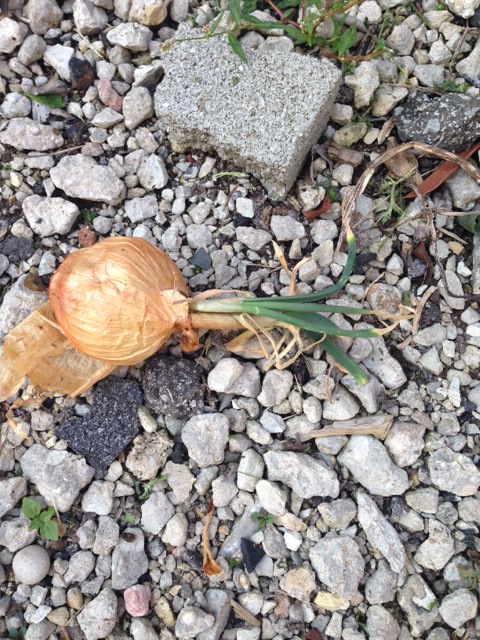
Found in the lot next to my building. Reminds me of the stinky onion of self-defeat.

professional — and even though the physical training had ended, the mental training of ballet stayed. There was some good in that training:  I was very goal-oriented, self-disciplined, extremely respectful of authority figures and teachers, I had a lot of body awareness, and strangely good peripheral vision. But I also retained heavy self-judgment and self-doubt, I was perfectionistic, and I could hardly ever acknowledge that I was doing a good job, let alone doing “enough.” And these characteristics made it hard for me to be good to myself as a college student and a young adult. These characteristics also made it hard for me to be good to the people around me.

What does all this have to do with life being a grassroots campaign? Yesterday I was listening to a podcast with Mike White, a movie writer and director. The topics he discussed were wide-ranging, but mostly focused on people’s jealousy and obsession with status. At one point he said, life is a grassroots campaign; we start with ourselves, in the body that we’re in and the dirt that we’re standing on, and from there we build out to the people around us.

And I realized — intentionally or not — that’s what I’ve been doing since the day I left ballet. I’ve been working to let go of the self-judgment and self-doubt, the perfectionism and the idea that I am never enough. I’ve been loosening my grasp on “perfect,” and reframing my life around growth and self-forgiveness. A small, quiet, tiny but profound internal revolution.

IMG_3221

I ask myself, are my health and body perfect? Definitely not. But can I see small changes  when I go to exercise, when I make a choice about what to eat, when I ask my body to do something challenging and it rises to the occasion?

I ask myself, is my job perfect, is this the job I want forever and always? No. But am I growing and changing through this job? Am I thinking of how I can use it as a bridge to develop into what I want and who I want to be professionally?

I ask myself, is my marriage perfect? Sometimes yes, but not always. But is it growing and changing with who we are? Are we approaching a life together focused on mutual love and support?

I ask myself, are my friendships and family relationships going the way I want? Mmm, it depends. But can I see how approaching a person with compassion and optimism can strengthen the ties we already have?

Can I see how my loving treatment of myself can build momentum, turn into a ripple and then a wave, and that over time it can radiate outward? And can I see that eventually I am the head of my own grassroots movement — one that is rooted in recognizing and cheering on growth, change, forgiveness, optimism, and resilience?