Addicted to the Big Reveal

So this winter break I’ve become really interested — okay addicted — to an HGTV show called Fixer Upper. Despite this show, and this network really, being responsible for my wife and me thinking we could buy a building (and then we did) I still love this show. And what’s not to love?

There’s the typical goofy husband / beautiful wife combo who work with clients to make their dream homes become reality. There’s some silliness during construction, a peek at the Gaines’ growing family and their animals at Magnolia Farms. It’s great.

What I especially love is that Big Reveal at the end. Ooh, I just friggin’ love it!!! The couple is nervously laughing and their shoulders are all tense, or they’re grabbing one another’s hands in anticipation, and Joanna or Chip ask, “Are you ready to see your fixer upper?” and the couple says “Yes!” and then the screens are pulled away and then someone shrieks with joy, or the couple hugs, or they exchange handshakes or hugs with Chip and Joanna. It’s the best, that moment of unveiling and sharing after such a long time of waiting and hoping and wishing and dreaming for the day.

I love the moment of the big reveal because energetically, spiritually even, it feels like a big moment of exchange, of following through with all your promises and giving it everything you had, of showcasing earnestness and honesty, of having every good intention fulfilled and put on display, of giving and healing — healing both the home owners and the home itself. It’s the final moment of taking someone’s trust (and money, of course) and turning it into a newness that was previously only imagined in the mind’s eye. The home, the place where our bodies and minds come to rest and where our energy is replenished, is made new. It’s just so… — I just love it.

And in some ways, New Year’s Eve feels like that, too. Tonight is the big reveal on the new year, on the start of 2018, something new and fresh. It’s like a backyard full of freshly fallen snow, and no one — not even a sparrow or a stray alley cat — has stepped foot on it yet. It’s blank, and the potential seems endless.

The tricky thing is what to do — and how to live — once we get that clean slate, that do-over, that moment of starting anew. I know I’ve had many Mondays where “this is the week that everything will go just the way I want it,” and of course it doesn’t — because life is a messy organism. And after one fail I wait for the next Monday, and it turns out that over the years I’ve spent a lot of time waiting to start over.

So I go into this new year focusing on the big themes I want to heal and make new — no, not make new — just see and live in a new way. Because we all have lives that are just like these fixer uppers — the bones are good and the potential is there, we just have to see it in ourselves and then lovingly, day after day, choose the path that creates change and fulfillment — one little Big Reveal at a time.

Christmas Shopping & Gender

This past Friday I was about 1% prepared for Christmas in all of the possible ways:  no gifts purchased, no decorations hung, no cards written, no cookies baked. But it was on the list of things to do for Saturday and my wife and I really got it done. At some point I just decided that this year all the adults were getting socks and all the kids were getting books, so I think that helped. Sorry, family members, if you’re reading this. Maybe I should’ve put a spoiler alert at the top for you. Either way, let’s move on.

Besides the socks and books, my wife and I did some other in-person shopping and as we zigzagged between the boys’ and girls’ clothing sections the contrasts were pretty stark. Thankfully a boy I was shopping for only needed clothes in navy and hunter green — but if he had wanted anything in an even slightly peppier hue, it would have been a challenge. At one point I stood in the tiled aisle facing in towards the clothing racks, boys’ side on my right and girls’ side on my left. The girls’ side looked like a a balloon had just popped and as many sparkles and frills as you could imagine rained down in colors like pink, soft purple, white and yellow. Since it’s Christmastime, there was also a good mix of red, green, and black, but when my eyes moved over to the boys’ side, it was like all the color had been leached out. Gray, navy, hunter green, black, more gray, a few spots of white and royal blue. That’s it.

And what does this tell our boys and men? Because it’s the same thing when I walked the women’s and men’s sections, if not even more pronounced. Women’s racks were strewn with dresses that looked like silver and gold disco balls and the men’s racks had black, gray, blue, dark green, more gray. Just looking at color, and not even more detailed things like fit or design, to me it looks like boys and men aren’t supposed to have any fun. They’re not supposed to see their bodies and their clothes as a way to express themselves, to be viewed in a decorative or showy way, to play with color, pattern, or texture.

To me this small detail, a wardrobe drained of color, portends that men cannot have — are not culturally allowed to have or are not “supposed” to have — a relationship with their own sensuality. Think about it — when you picture a “bachelor pad” in your mind, what do you see? Over the years in person and in media I’ve mostly seen hyper-minimal looks, lots of black, white, gray, and stainless steel, maybe some raw or dark wood, maybe some sports memorabilia. Colors are often bland and dark. It’s often feels hard and in many ways lifeless. Sometimes even a bit cold and empty.

And what does male clothing or home styling have to do with anything? Well, we’re having this national “moment” about men and their bad behavior towards women — not all men, but enough men towards enough women that it’s made its way into many of our daily conversations. It makes me wonder:  if these men, who were once boys, had been allowed to get in touch with the full range of their sensuality by playing with color in something as mundane as their clothing, what would have happened — what could have happened?

If men had had the chance, the permission, to wear yellow, orange, purple — gasp! pink! — what would that have felt like? Would it have sparked a change, a tiny shift, into asking the simple question:  What else? What else can I feel? What else can I experience? And what if the what else didn’t end with color and clothing, but with putting aside other hyper-masculine attributes to explore something else, another side of who they are and another way of being in the world? What if they asked what else when it came to expressing affection? What if they asked what else when they wanted to express sexual desire? What if they asked what else — how else can I deal with this — when they felt sad, lonely, rejected, isolated, unattractive, unwanted?

Because beyond being male, each individual person, regardless of sex or gender, is so much more — and there is always something else, something more to explore, something more to see, another shade or angle to experience.

And if you’re a man or identify as male, it’s very likely that if you’re like most of the men I know:  you haven’t had a chance to explore your sensuality, your creativity, your way of being in the world that isn’t highly dictated by very strict masculine norms. And what a thing — to miss out on all the shades of life. How dull. How boring. How gray.

How do we solve a problem like Ms. Coughlan?

The public schools in Chicago are going into their fifteenth or sixteenth week of school, and I’ve been feeling a little behind. Some of it absolutely has to do with buying a building, moving, and becoming a landlord (landlady? landperson?). The bigness of a move and the shift from being a renter to an owner is a much bigger deal than I initially realized. But something’s been off beyond that. And it has to do with how much time I’ve been spending on my students’ parents.

Yes, you read that right. Not the students, but their parents. And honestly, it’s not all the kids’ parents. Really it’s one set of parents who are very, very intense. And I’d say calling them intense is nice. Because I think — were I in another profession — it would be called harassment. I mean, would you be emailing your doctor or attorney — or hell — your handy man or car mechanic on a daily basis, questioning their every move despite their regular updates? And then regardless of their responses, would you then go to their bosses — behind their backs — to complain about how they’re not doing their job?

But let’s rewind. How has it gotten to this level? Well, without going into too much identity-revealing detail about the child, it essentially has to do with the parents — on a fundamental level — disrespecting me and living in a deep level of denial. You see, early on in the year, probably around week four or five of school, I reached out to the parents, expressed some observations and concerns, and presented a plan to support their child. The parents agreed, said it was a great plan and appreciated it so much, please move forward. Then when I clarified my plan with my administrators I realized that I had skipped an important step in the support process, and so I had to reach out to the parents again, let them know our support plan would be delayed about 10 school days, and then we could resume. Upon hearing that these supports were now more official — aka not off the books and not done “just between us” — they freaked out and refused the supports. Because — obviously — Harvard and Yale and Northwestern are all monitoring third graders’ support plans.

So, I complied with their wishes and never implemented the plan. However, their child continued to exhibit the same concerns, and the child has continued to free fall. And here we are:  the child has an F in a core class and Cs in the other two. And it’s all my fault.

And as this whole exhausting, distracting, unnecessary fiasco has proceeded I began to lose myself in the drama and the conflict. I also started to hypercritically monitor myself and question my every move. It got to the point where I had to ask my colleagues if what I was doing in my classroom was even teaching. The voices of criticism and self-doubt, and the shrill demands of these overly protective, overly demanding parents got that strong.

I’ve been working in the field for 11 years and I’ve been teaching third grade specifically for 7 years now, but I don’t think that I’m on autopilot by any means. I don’t shy away from questioning myself, consulting with other teachers, listening to parents’ concerns, or making changes to my routines and methods. But the place I got to — doubting myself on a fundamental level — was unwarranted because I wasn’t doing anything wrong. If anything, I had done everything right and I’d been doing a damn good job the whole time, and was wasting my precious time on a set of parents who weren’t showing me respect as a professional or even as a person. Granted, their passive-aggressive tactics show they’re acting from a place of fear and denial and I feel for them in that sense, but I have to draw a line somewhere. I’m not going to let someone’s fear of their child “needing support” take over my professional life and throw my teaching into a tailspin — at least, not anymore.

So we’re scheduled to meet next week to discuss, well, whatever it is they need to discuss. Again. Thankfully there will be someone there mediating. But I’d like to leave you with a few tips to live by, especially if you’re a parent of school-age kids. I  mean to share this with the utmost care and respect, so please read on with an open mind.

Tips for dealing with “difficult” teachers:

  1. Remember that this teacher is responsible for your child as well as up to 30 other children. The teacher has to make sure all children are learning, and it can be a difficult task to keep track of 30 lives simultaneously and for multiple consecutive hours. Please recognize this is hard, and they’re doing their best.
  2. Remember that this teacher is not any other teacher your child has had before. Their previous grade level is over, and with a new grade level come new challenges and higher expectations. Your child may need some time adjusting to these changes. Good thing you’re there to help them!
  3. Remember that even though the teacher is responsible for your child’s learning, it’s never too early to teach your child strategies for self-advocating. Ask your child about the class procedures for getting teacher help. It may be as simple as raising their hand or asking a neighbor. Also, simple phrases like, “Can you please help me with this?” and “I’m not sure what to do, can you help me?” are music to most teachers’ ears. Encourage your child to be a risk-taker and ask for help.
  4. If you notice that your child is uncertain about what to do on homework assignments or looks confident and then fills out everything wrong, remember that you can ask the teacher for support and clarification. Asking sooner rather than later is everything. 
  5. Remember if your child’s teacher is telling you about ways your child is struggling, they have no ulterior motives — other than to share information with you and find some ways to work together. Even if your child never acts the way the teacher describes at home, school life and home life can be very different in the child’s eyes, and what the teacher is saying is mostly likely true. Please take the teacher’s feedback in good faith.
  6. Remember that teachers want solutions, not problems. No teacher wakes up in the morning planning ways for their students to fail or struggle. It’s quite the opposite. Teachers are driven and impassioned by their students’ success and growth. Nothing makes a teacher happier than seeing their students happy, growing, and learning. Those are the moments teachers live for. 

Taking Things Apart

About two weeks ago, I came home from work to see my mom and wife preparing to take apart the pipes under the kitchen sink. The sink had been draining slowly for a few days and she had decided to call my mom, who knows a few things about home maintenance and repair, so that she could learn to do it herself. Three hours later, after a trip to the hardware store and a few breaks to just stare at the mess we’d made, the sink was put back together and draining just like it should. The process, though, was very uncomfortable for me. Partially because I didn’t know that The Kitchen Sink Project was going to happen, and partially because I feel very uncomfortable with taking things apart and making a mess.

In part some of my discomfort — that borders on dread — stems from my upbringing. And what better way to get to know myself and my childhood hardwiring than to throw myself into new or uncomfortable situations? My mom liked a very orderly, neat and clean house. And I don’t blame her:  she was a single mom with two kids and she had to go to whatever lengths she could to make sure we were clean, clothed, fed, and educated. As a result, keeping a tight schedule and an orderly home was the cornerstone of my childhood. Neat and orderly is generally a good thing, but sometimes there can be too much of it.

I remember as a kid, probably around 10 or 12, I felt inspired to draw, so went to take out some art materials. I opened up the cabinet and reached for the little plastic watercoloring set that we had had for years, but at the thought of having to control and then clean up the mess, I stopped myself. Rather than deal with the burdens of mess and clean up, I chose to avoid it. I chose to do something else instead. And that wasn’t the only time. As I grew up if I could do something cleaner, tighter, more contained, I chose that option. I systematically began to avoid messes, experimenting with materials, taking things apart, getting dirty.

IMG_3314

Odds and ends from the tool closet.

The philosophy of staying need, tidy, and contained continued at school, too. When it came to those typically messier, more hands-on subjects like art or science, my teachers trotted out the easiest possible options. Paper and pencil drawings in art, maybe occasionally something like paper mosaics with construction paper and glue. And for a real treat, drawing with oil pastels or chalk on paper. In science, work mostly revolved around textbooks — books we couldn’t even take home to read, because in middle school there was a set of 30 for about 90 of us. In fifth grade I got to dissect an owl pellet, but I think my teacher only got five or six, so we had to share in groups of five or six. For me as a student, explorations meant looking on from a safe distance — from behind glass at a museum, by looking over my grandpa’s shoulder at his workbench, by wondering in my head and just leaving it at that. Maybe sometimes I’d look it up in a book.

And what does this mean? In part I see that it makes me really aware as a homeowner that I am uncomfortable with fixing things, with taking things apart, and making them work again. I’m afraid to make a mess. Partially because there’s the nuisance of cleaning up afterwards, but also because I’ve never really dealt with this kind of mess before. I haven’t had the chance to explore under someone else’s guidance. And as far as the house is concerned, I’m both child and adult as I begin this process of learning. I’m leaning how things work, I’m pushing myself to explore pieces and parts of the house and how things go together, I’m trying to build the belief in myself that if I take something apart I will have the know-how to put it back together again.

That experience with the sink was small, but empowering. With some perseverance, a little willingness to experiment, some coaching from my mom and encouragement from my wife, I did it — actually my wife and I did it. And afterwards I felt that click in my head, that particular part of my body and brain turn on and get excited. I felt the rush of doing something real for myself and my house. And as a teacher it made me want to bring that rush of excitement, that kind of learning experience, to my students.
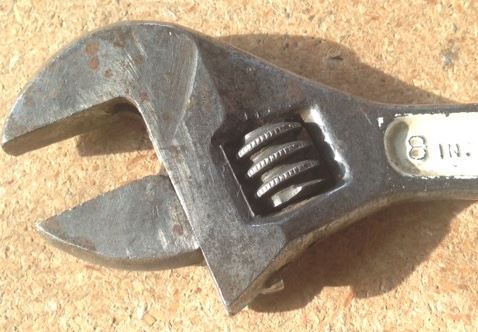
IMG_3316

My grandpa’s tool, now mine.

Because truly, how often do they get to explore and play — and with something that can eventually become real and meaningful? Culturally I see that there’s a push for kids to be “college and career ready.” And as a teacher I believe in education. Of course. But the obsession with college and “good jobs” is, frankly, bullshit. We see that the most recent generation of young adults is deep in college loan debt, to the point of being paralyzed by it. And in many cases, I see that people don’t know how to do. Generally speaking, we don’t cook for ourselves very much, we don’t fix things for ourselves, we don’t make or manufacture things for ourselves. Because — didn’t you know? — that’s someone else’s job. Somewhere along the line of pushing our children to be college and career ready we began devaluing and distancing ourselves from the valuable work of taking things apart, fixing things, and making them work again. Which to me is one of the most real things a person can do. It’s a tangible example of our realness and our power in the world outside ourselves.

And as I get of taste of my own realness, my own power to fix and make things, I see that I’m starting to question things. I’m asking, how does this work? How is this put together? Why does it work like this? Is there some way to make this better? Where does this come from? Can I fix this? What can I do to change this? And if I’m asking these questions after fixing one little ole sink, what kind of questions would our kids start to ask themselves when they have a taste of a something similar?

And if I see that I have the power to question, to take things apart, to get messy, to put things back together in a way that makes them better — and to clean up the mess, too — then I see that I can be powerful in other ways, too. And when “powerful people” want to tell me that they’re right and I should fall in line, I can stand in the knowledge of my own power and push back. I know that I don’t have to avoid taking things apart or to making a mess. I know now that I have the power to fix it. And I want the same confident stance for my students and for the future adults of our planet.

IMG_3320

An assortment of inherited and newly purchased tools: vise grip, wrench, pliers.

There is beauty and power in being real, in being here  and doing things that are visible and tangible, things that concretely alter and improve the landscape of our lives. So let’s take things apart — from the humblest kitchen sink to the way we view ourselves and our places in the world. Let’s get messy and work on it together.

On Moving

I have been on a hiatus, not completely by choice but definitely out of necessity. My partner and I moved at the beginning of the month; today marks three weeks. And it wasn’t just any move, we bought a building, inherited two lovely tenants, and are now the masters of our domain in Bridgeport, one neighborhood south of where we used to live in Pilsen (although my wife continuously reminds me that — according to her — we didn’t really live in Pilsen because we were too far east).  Either way, we moved and it was a big deal. Only it took me a while to see that.

IMG_3287

There is nothing like staying at home for real comfort. ~Jane Austen

Funny how survival — or maybe stress and self-preservation instincts — work. I was so busy for weeks, maybe more than a month, thinking and planning and anticipating and packing and overall feeling upended that I didn’t allow the realness, the bigness, of our move sink in until now. Yes, I was sad to move — our old apartment was the place where we became newlyweds and went through a lot — and yes, I was excited to open up a new chapter in our lives, but I didn’t have time to sit and let it sink in, let it settle in my bones and have it really permeate and feel real until now. Now that we’re on Thanksgiving break and I have time to sit and just be, to look out the windows and walk through the rooms and feel the doorknobs in my hands and hang my coat in the closet and wipe down the counters, do all those tiny mundane things that hardly register as anything, I’ve gotten it. We’ve moved. I moved. And now I’m here. And I love it.

IMG_3289

The invariable mark of wisdom is to see the miraculous in the common. ~Ralph Waldo Emerson

It’s such a pleasure to know that this small corner of the world is mine, is ours, and that we’ll be able to make plans and see them come true. And this will be its own form of magic — coming home.


Was I that kid?

The classroom is most definitely a microcosm of society. Just like in “the real world” — also known as the world outside the classroom — there are moments of imbalance and injustice. What I’ve been struggling with and turning over in my head the last few weeks is what I can do about it, both as the adult in the room when I’m teaching and as a person in the world when I’m not.

Columbus Day just passed and I was going to say something about that, something about how it’s a bullshit day, that it should really be a day to honor the African Diaspora and the First Nations People rather than the conquerors. Then I was going to say something about facing the reality of our American culture, that many of the most “American” things emanate from non-white people and non-white places, ranging from the music we listen to to everyday technologies we take for granted.

But that statement alone wasn’t going to be enough; this nationwide, even worldwide negligence of balance, truth, and justice is part of it for me. It’s part of my slowly roiling frustration when I’m in the classroom this year. Another part of it is that now that I’m working with white kids — my first time in 11 years of teaching — I’m now seeing my biases up close on a daily basis and I’m seeing how extremely fucking sneaky they are, and worse yet, how little innocent white kids rely on them, base their entire stance in the world on them — and how adults like me perpetuate the cycle.

And so I arrive at a buffet of doubts and questions. Was I like these white kids when I was a kid? Did I take up so much space with my whiteness and the privileges it brings that I left no space for anyone else? Did my entitlement over-magnify me to the detriment of my peers? Did my implicit expectation that of course I’d win or get what I asked for or be chosen or go first take that experience away from someone else who was just as deserving — or more deserving? Did I just go through most of my life thinking I was a sweet girl in grammar school, friends with everyone, darling to all, while my classmates were just waiting for me to leave the room so they could finally breathe and take up some goddamn space?

I’d love to believe that I wasn’t like that. But maybe I was. Maybe I did take up that much space in the classroom, in the teacher’s psyche, in my classmates’ mental and emotional space. And with every inch I took, every time I raised my hand, answered a question, made some subtly domineering move in the classroom, my non-white peers got just that much less space for themselves, for their self-expression, for their self-exploration, for their risk-taking, for their leadership, for their ideas, for their questions, for their existence.

And there’s nothing I can do about it now, unfortunately, no way for me to go back and fix it, fix myself, teach my younger me how to not be an entitled jackass kid. But what can I do now? What can I do?

Well, I have to see this as my chance. I get to be a defender and a bridge and a guide all at once. My job is to guard the classroom space, keep it clear and open for all of my kids to lead, question, grow, take risks — to defend all of my kids’ rights to experience education, the act of learning and engaging and growing past their current boundaries. My job is to bring these kids together, bridge their differences, draw them close together and set up the expectation that they will always mingle, always integrate, always know one another, and always wish to know one another. My job is to guide them through rich and diverse materials, highlighting the beauty and value in everyone, in all of us, honoring our shared humanity. How exciting. How terrifying.

I acknowledge that I’m going to fail, and do it wrong, and forget myself and give in to something deeply coded into my brain. But I’m trying to push through my own shit to open up space and keep it open, one inch at a time.

Leadership is… (the kids version)

This entry is inspired by the way I found my classroom on Friday afternoon. I’d been out all day at a teacher leadership meeting, and returned to my building after hours to meet with my team. But before that, I stopped by my room — my home away from home — to reset a few things for Monday, and came upon a giant mess:  my desk overflowing with disorganized papers, pencils and facial tissues littering the floor, chairs strewn about the room, the morning message still left up on the board (eight hours later!!), a full newspaper stuffed into the teacher trash can, and a nearly untouched stack of assignments and activities that I had prepared the night before and left for the substitute teacher to lead the kids in doing. I can only imagine what they got up to all day. If only I could’ve been a fly on the wall.

52841864390__F554AFE8-E710-4B28-9061-008AFE5D3BCB

Exhibit A: The messy desk — I promise, I don’t leave it this way!

We’ve had many examples — interesting examples — of leadership in the news in the recent past. And many people have delved into those newsworthy examples, people who are better informed than I am, so I will leave that to them. But the classroom and the school setting are very often parallel worlds to what’s going on in the larger community — the citywide community, the statewide or national community, the global community — and that made me think about what I’m going to tell my students, my kids, on Monday. So humor me as I work through a draft of it here:

Based on the conditions I found in the room on Friday, I can make a few assumptions about what happened, how you behaved, and how your substitute teacher behaved. Some will blame the teacher for being a bad leader — in some ways I do — but I also put responsibility on you — all of you — for letting this happen. I know you are just children, only eight or nine years old, but your experience on Friday was an important lesson. And unfortunately you’re going to see as you grow up that the leaders who are meant to be in charge, to direct you and your daily activities, who are supposed to make decisions that are on your behalf, designed to benefit you — they will fail. And when you find yourself in that situation, you have choices.

One, let go and have fun. Don’t resist and follow along. And why not? It’s not your fault that the leader’s doing a bad job, making decisions that aren’t best for you or your community. It’s not your job, it’s someone else’s. And I understand. However, in those times you have other options, ones that are more powerful than that.

Once you realize that the leader, the person who’s supposed to be at the helm, driving the bus and choosing the path, isn’t making good decisions, then it’s up to you. Because you see what’s lacking, it is up to you — it is up to you — to take the lead. I’m not asking you to be defiant or disrespectful of the adult in the room, the leader of the classroom, but I am asking you to look around and think. Consider what would be best for you in this moment, and think about how you can bring others along with you into positive, respectful, and responsible choices. That’s a leader and that’s leadership. Start with the people nearest to you, and suggest that you all do something together — read, study, work on something as a group. If you can, spread out and visit other parts of the room, urge and encourage those friends to do the same. Stay optimistic, be persistent and positive, be flexible in your approach to the teacher and your classmates, show resilience and bounce back when you are ignored, and strive to do your best — even if the final, positive results are only with you. That’s being a leader.

And being a leader, a true leader, a sustainable and honorable leader, does not often lead from the helm, lifted up on a platform, dictating or bossing or threatening. Leaders are living and learning and moving among their friends, striving to be their best selves in all circumstances, welcoming their friends into better choices, searching for and magnifying their peers’ strengths, supporting and encouraging them through challenges, believing in them persistently — all the while with their eyes, their minds and their hearts set on creating a bond and a community among everyone, with mutual respect and responsibility as their goal.

So, we are going to take a step to the side today, to reinvest in one another and to plant the seed of leadership in our hearts — in each and every heart here in this classroom. We are going to build our community stronger by getting to know one another more deeply, by creating personal goals, sharing those goals, and pushing ourselves everyday this week to be on each other’s team, to encourage everyone to reach their goals and to be their best selves. Because if we can find that leader in ourselves, then we will always have a choice — no matter what may come — and we will know how to stay strong as individuals and as a community, and we will reach our goals no matter what.

i see you, i thank you, i love you

I just came home from a long visit with The Kids. Let me explain. I’m not a mother, but I’m a teacher. So in a way, I’m a part-time mother to many. In this specific case, The Kids are a family of four kids who are currently being taken care of by their grandmother, who they consider their mom. The full storyline is a little muddled and gray, but in general the gist is something like the mom was mentally and emotionally unstable, had four (or maybe five) kids within about six years, and through a series of abandonments and neglect, left them with her own mother to take over full custody and care for them.

I’ve come to know them — and love the shit out of them — through my wife, who was preschool teacher to the youngest two, the boys. Through a long series of conversations and events we saw that one of the boys was gifted, like truly gifted, and he qualified to attend the regional gifted program that’s housed in my school. Besides seeing them at school, we’ve gotten closer to them over the years, taking them out on the weekends and during the summer, attending their teacher conferences and meet the teacher nights, helping with school projects, all that.

And we just came home from a long visit with them. Unfortunately they’re struggling to deal with school and their emotions and how to treat one another and how to listen to their mom — essentially how to process and deal with their unfairly fucked up lives. But none of this stuff is their fault, they didn’t create any of the circumstances or make any of the decisions that have landed them where they are today. And even though they’ve been struggling lately, overall they’ve been amazingly resilient and strong; they’ve gone through more emotional trauma than even most adults and they’re not even four feet tall yet.

Which leads me to thinking about several things. One, the mothers and fathers — parents through blood or love — who, regardless of what life has thrown at them, have pushed themselves to get to work, show up for their kids, do whatever is in their power to protect, nurture, and push their kids to their highest heights — I see you, I thank you, and I love and admire you for the sacrifice, the drive, and the never-ending persistence that you show. Because of parents like you, your child’s success is not a possibility, it’s already a fact. You are doing it, and it’s already happening.

Two, to the children of these circumstances — whether you are still small or already in a grown-up body living in the world — even if it doesn’t seem like you’ve had much in your life that was given to you, like nothing was ever easy, you are making your life — you are the creator of your fortune — and because you have come from such depths you have the capacity to know such heights. You have been burnished by hardship, and smoothed by rough waves, and your success means more to the world — it just does. Your accomplishments, your wins, your awards and prizes, they are a beacon and a victory, a jewel in the crown of creation, because your life demonstrates how a person can create something wonderful from almost nothing. You are a piece of magic on earth.

So to my friends and even unknown readers who are seeing this, I know it can seem like your life is hard and small and heavy. All the little shit builds up to a crushing weight. But take a minute and look back to those moments when you were low, so much lower than you are now. And ask yourself — how have I gotten this far? Most likely the answer is that it’s been through the care of a parent — from blood or love — and through you, your power and your decision to be better. Please keep going — don’t stop — you’re almost there. And I see you, I thank you, I love you.


Let go and let go until it’s really let go

I grew up Catholic. My mom took my brother and me to church every Saturday — well — kind of religiously. Why Saturday? Isn’t it supposed to be Sunday? Yes, sure. However, technically Sunday is the first day of the week and so Saturday is the last day of the week, a day of rest and the Lord’s day. Also, Saturday mass is less crowded than Sunday mass, so it’s shorter and we’re in and out faster. What can I say? My mom was a very efficient Catholic.

Regardless of what day and time I went to church, I grew up hearing about forgiveness. There was confession, where the priest forgave you your sins, there was praying to saints and Mary who could intercede for you, and there was also praying straight to God, whichever of the three members of the Holy Trinity you decided to pray to, who you might ask for forgiveness. This isn’t meant to be a critique of the Catholic faith or my upbringing, but in some ways — even as an eight-year-old — I just felt, or even knew that someone saying, “You’re forgiven” didn’t really mean it was so. Really? Just like that? Forgiven?

I spent some time as a child, adolescent, and young adult thinking about forgiveness and what it actually is, but I didn’t have much to grab hold of, something concrete. Even when I’d watch 20/20 interviews with the mothers of murder victims — the poster people of forgiveness — saying, “I’ve come to forgive [so-and-so murderer] for what he’s done to [so-and-so victim],” I’d watch and still wonder. What exactly happened, inside that mother, inside her brain or her heart or her consciousness or her spirit or her I don’t know what, that determined she had undergone the process of forgiveness?

I meditate. I’ve been doing meditation and energy work for years now, and in that setting, some of the energy I’ve worked with is the energy of forgiveness. It even has a color. Gold. And I’d use it in meditations, work with others using it, and still not quite get it. What is forgiveness? What’s happening here?

And maybe this is all obvious to you, if you’ve listened more carefully in church than I have or watched 20/20 interviews more intently or really gotten it when you meditated, but it hasn’t been like that for me. I just never knew if I was going to be capable of understanding forgiveness, of having forgiveness, of performing the act of forgiveness towards someone else.

Then, when I was in the process of meeting my now-wife, I was hurt. I was really hurt deeply by someone I had considered a friend, even a best friend — if that even exists for adults. After coming out to her (even I didn’t quite know and accept that I was gay until I met my wife), and telling her about my new relationship, she stopped speaking to me, excluded me from her own wedding party without telling me (I only found out when I went onto her wedding website to RSVP and saw the wedding party and that I wasn’t in it), and then informed me the night before my own wedding that she wouldn’t be attending because — well — just because.

And initially I was angry, and then happy because I was married the next day, and then numb to feeling anything about her because I was busy being married and working and living life. But finally the dust settled. And I could feel a space, a hole, that she used to inhabit. And I realized, I’m hurt. I’m sad. And I’m also fucking pissed. I had not forgiven her — at all. And every time I saw her I would either want to pretty much stab a pencil through her eyeball — or on better days — I’d want to be friendly, supportive, caring (her engagement fell through and she was pretty devastated for a while) but there was an invisible wall there, something holding me back.

I could go on and on for another 25 paragraphs about all the internal processing I had about her, our friendship, about myself, but I won’t. I did realize, though, that in order to let myself heal, move on, and make truer, more meaningful, and lasting friendships, I’d have to let go — I’d have to forgive. And every time I see her different feelings are stirred up within me, but when the dust settles, I let go. I let go a little more and then a little more and then a little more. On an energetic level I thank her for being who she was to me when we were friends, and I let go. And the letting go creates a space, a new space, a different space. And in that space forgiveness resides.

Life Is a Grassroots Campaign

Last week I wrote about my appreciation for my body, for all the things that it allows me to do. That appreciation still holds, but I’d like to go into it a little further; with all things simple, there is a lot to be mined from the depths.

I grew up studying ballet, a discipline which in general teaches its students to have anything from a mild distain to a full hatred for the body — usually because it’s not meeting the ideals of the ballet physique or the standards of what a body should do and how it should look doing it. If you want to seen an example of just how much ballet can skew your self-concept, take a look at this Russian ballet superstar.

In addition to ballet, add the fact that I’m female. The pressure to act and look pleasing  is so subtly pervasive, it’s like a mist in the air; you know there’s something there, but you just can’t quite put your finger on it. Then, compound that with female competition — who’s the most pleasing, the thinnest, the smallest, the prettiest — and I was swimming in a pretty chunky self-hatred stew. The trouble is, like I mentioned, it’s so pervasive and so common — and starts at such a young age — that I wasn’t even fully aware of it until I was well into womanhood.

I left ballet towards the end of high school — I wasn’t going to be good enough to be

IMG_3222

Found in the lot next to my building. Reminds me of the stinky onion of self-defeat.

professional — and even though the physical training had ended, the mental training of ballet stayed. There was some good in that training:  I was very goal-oriented, self-disciplined, extremely respectful of authority figures and teachers, I had a lot of body awareness, and strangely good peripheral vision. But I also retained heavy self-judgment and self-doubt, I was perfectionistic, and I could hardly ever acknowledge that I was doing a good job, let alone doing “enough.” And these characteristics made it hard for me to be good to myself as a college student and a young adult. These characteristics also made it hard for me to be good to the people around me.

What does all this have to do with life being a grassroots campaign? Yesterday I was listening to a podcast with Mike White, a movie writer and director. The topics he discussed were wide-ranging, but mostly focused on people’s jealousy and obsession with status. At one point he said, life is a grassroots campaign; we start with ourselves, in the body that we’re in and the dirt that we’re standing on, and from there we build out to the people around us.

And I realized — intentionally or not — that’s what I’ve been doing since the day I left ballet. I’ve been working to let go of the self-judgment and self-doubt, the perfectionism and the idea that I am never enough. I’ve been loosening my grasp on “perfect,” and reframing my life around growth and self-forgiveness. A small, quiet, tiny but profound internal revolution.

IMG_3221

I ask myself, are my health and body perfect? Definitely not. But can I see small changes  when I go to exercise, when I make a choice about what to eat, when I ask my body to do something challenging and it rises to the occasion?

I ask myself, is my job perfect, is this the job I want forever and always? No. But am I growing and changing through this job? Am I thinking of how I can use it as a bridge to develop into what I want and who I want to be professionally?

I ask myself, is my marriage perfect? Sometimes yes, but not always. But is it growing and changing with who we are? Are we approaching a life together focused on mutual love and support?

I ask myself, are my friendships and family relationships going the way I want? Mmm, it depends. But can I see how approaching a person with compassion and optimism can strengthen the ties we already have?

Can I see how my loving treatment of myself can build momentum, turn into a ripple and then a wave, and that over time it can radiate outward? And can I see that eventually I am the head of my own grassroots movement — one that is rooted in recognizing and cheering on growth, change, forgiveness, optimism, and resilience?