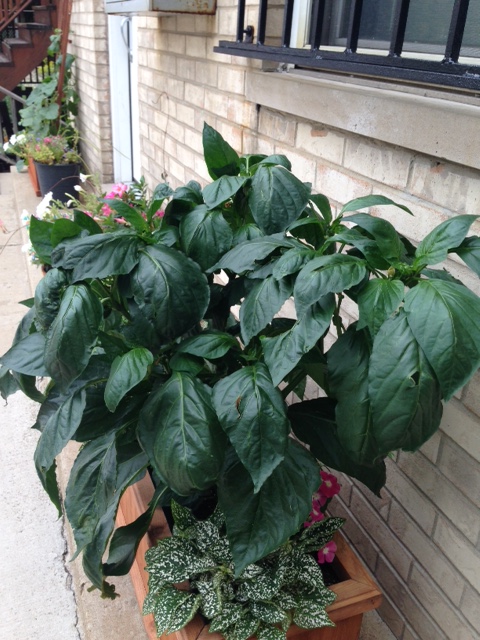
Let go and let go until it’s really let go

I grew up Catholic. My mom took my brother and me to church every Saturday — well — kind of religiously. Why Saturday? Isn’t it supposed to be Sunday? Yes, sure. However, technically Sunday is the first day of the week and so Saturday is the last day of the week, a day of rest and the Lord’s day. Also, Saturday mass is less crowded than Sunday mass, so it’s shorter and we’re in and out faster. What can I say? My mom was a very efficient Catholic.

Regardless of what day and time I went to church, I grew up hearing about forgiveness. There was confession, where the priest forgave you your sins, there was praying to saints and Mary who could intercede for you, and there was also praying straight to God, whichever of the three members of the Holy Trinity you decided to pray to, who you might ask for forgiveness. This isn’t meant to be a critique of the Catholic faith or my upbringing, but in some ways — even as an eight-year-old — I just felt, or even knew that someone saying, “You’re forgiven” didn’t really mean it was so. Really? Just like that? Forgiven?

I spent some time as a child, adolescent, and young adult thinking about forgiveness and what it actually is, but I didn’t have much to grab hold of, something concrete. Even when I’d watch 20/20 interviews with the mothers of murder victims — the poster people of forgiveness — saying, “I’ve come to forgive [so-and-so murderer] for what he’s done to [so-and-so victim],” I’d watch and still wonder. What exactly happened, inside that mother, inside her brain or her heart or her consciousness or her spirit or her I don’t know what, that determined she had undergone the process of forgiveness?

I meditate. I’ve been doing meditation and energy work for years now, and in that setting, some of the energy I’ve worked with is the energy of forgiveness. It even has a color. Gold. And I’d use it in meditations, work with others using it, and still not quite get it. What is forgiveness? What’s happening here?

And maybe this is all obvious to you, if you’ve listened more carefully in church than I have or watched 20/20 interviews more intently or really gotten it when you meditated, but it hasn’t been like that for me. I just never knew if I was going to be capable of understanding forgiveness, of having forgiveness, of performing the act of forgiveness towards someone else.

Then, when I was in the process of meeting my now-wife, I was hurt. I was really hurt deeply by someone I had considered a friend, even a best friend — if that even exists for adults. After coming out to her (even I didn’t quite know and accept that I was gay until I met my wife), and telling her about my new relationship, she stopped speaking to me, excluded me from her own wedding party without telling me (I only found out when I went onto her wedding website to RSVP and saw the wedding party and that I wasn’t in it), and then informed me the night before my own wedding that she wouldn’t be attending because — well — just because.

And initially I was angry, and then happy because I was married the next day, and then numb to feeling anything about her because I was busy being married and working and living life. But finally the dust settled. And I could feel a space, a hole, that she used to inhabit. And I realized, I’m hurt. I’m sad. And I’m also fucking pissed. I had not forgiven her — at all. And every time I saw her I would either want to pretty much stab a pencil through her eyeball — or on better days — I’d want to be friendly, supportive, caring (her engagement fell through and she was pretty devastated for a while) but there was an invisible wall there, something holding me back.

I could go on and on for another 25 paragraphs about all the internal processing I had about her, our friendship, about myself, but I won’t. I did realize, though, that in order to let myself heal, move on, and make truer, more meaningful, and lasting friendships, I’d have to let go — I’d have to forgive. And every time I see her different feelings are stirred up within me, but when the dust settles, I let go. I let go a little more and then a little more and then a little more. On an energetic level I thank her for being who she was to me when we were friends, and I let go. And the letting go creates a space, a new space, a different space. And in that space forgiveness resides.

Life Is a Grassroots Campaign

Last week I wrote about my appreciation for my body, for all the things that it allows me to do. That appreciation still holds, but I’d like to go into it a little further; with all things simple, there is a lot to be mined from the depths.

I grew up studying ballet, a discipline which in general teaches its students to have anything from a mild distain to a full hatred for the body — usually because it’s not meeting the ideals of the ballet physique or the standards of what a body should do and how it should look doing it. If you want to seen an example of just how much ballet can skew your self-concept, take a look at this Russian ballet superstar.

In addition to ballet, add the fact that I’m female. The pressure to act and look pleasing  is so subtly pervasive, it’s like a mist in the air; you know there’s something there, but you just can’t quite put your finger on it. Then, compound that with female competition — who’s the most pleasing, the thinnest, the smallest, the prettiest — and I was swimming in a pretty chunky self-hatred stew. The trouble is, like I mentioned, it’s so pervasive and so common — and starts at such a young age — that I wasn’t even fully aware of it until I was well into womanhood.

I left ballet towards the end of high school — I wasn’t going to be good enough to be

IMG_3222

Found in the lot next to my building. Reminds me of the stinky onion of self-defeat.

professional — and even though the physical training had ended, the mental training of ballet stayed. There was some good in that training:  I was very goal-oriented, self-disciplined, extremely respectful of authority figures and teachers, I had a lot of body awareness, and strangely good peripheral vision. But I also retained heavy self-judgment and self-doubt, I was perfectionistic, and I could hardly ever acknowledge that I was doing a good job, let alone doing “enough.” And these characteristics made it hard for me to be good to myself as a college student and a young adult. These characteristics also made it hard for me to be good to the people around me.

What does all this have to do with life being a grassroots campaign? Yesterday I was listening to a podcast with Mike White, a movie writer and director. The topics he discussed were wide-ranging, but mostly focused on people’s jealousy and obsession with status. At one point he said, life is a grassroots campaign; we start with ourselves, in the body that we’re in and the dirt that we’re standing on, and from there we build out to the people around us.

And I realized — intentionally or not — that’s what I’ve been doing since the day I left ballet. I’ve been working to let go of the self-judgment and self-doubt, the perfectionism and the idea that I am never enough. I’ve been loosening my grasp on “perfect,” and reframing my life around growth and self-forgiveness. A small, quiet, tiny but profound internal revolution.

IMG_3221

I ask myself, are my health and body perfect? Definitely not. But can I see small changes  when I go to exercise, when I make a choice about what to eat, when I ask my body to do something challenging and it rises to the occasion?

I ask myself, is my job perfect, is this the job I want forever and always? No. But am I growing and changing through this job? Am I thinking of how I can use it as a bridge to develop into what I want and who I want to be professionally?

I ask myself, is my marriage perfect? Sometimes yes, but not always. But is it growing and changing with who we are? Are we approaching a life together focused on mutual love and support?

I ask myself, are my friendships and family relationships going the way I want? Mmm, it depends. But can I see how approaching a person with compassion and optimism can strengthen the ties we already have?

Can I see how my loving treatment of myself can build momentum, turn into a ripple and then a wave, and that over time it can radiate outward? And can I see that eventually I am the head of my own grassroots movement — one that is rooted in recognizing and cheering on growth, change, forgiveness, optimism, and resilience?


Thank You, Body

This week, again, was spent working in my classroom so what I planned to write about got a little derided. However, I think the things I’ve been thinking still apply. So, here we go.

Even though I’m female and I’ve been raised in an American culture that encourages girls and women to be their biggest critics — and even despisers — of their bodies (too fat, too skinny, too tall, wrong hair, wrong skin, blah blah blah) I love and appreciate my body so much, especially in weeks like these.

My body has been my lifelong companion. I mean, duh, obviously, but really — think about that — your body is the only living thing that will be with you your entire life. Not your parents, your siblings, your spouse, even friends or pets. Maybe a tree or a sea turtle, but for argument’s sake let’s just say it’s just you inside your body. And the fact that your body is alive and functioning means you’re alive and on this planet, living a life. Your body is your host and home for the life you’re living and simultaneously it’s a living organism with needs — just like any other living organism. And the profound thing is that this body is yours — and my body is mine — and that body goes with me and does pretty much whatever I ask it. Get up at 5:55am everyday? Okay. Walk briskly and stand in lines and carry heavy boxes and lift bins overhead and climb a ladder and get down from a ladder? No problem. Go five, six hours without food because you’re busy? Well, why not. And in some ways this is an everyday miracle. The fact that I can do and do and do and think and do some more — all while nearly forgetting about my body, having my body be a transparent tool that does whatever I want it to do, is a tiny miracle. And I am so grateful — my body is strong and loyal.

But loyalty reminds me — I have to be loyal, too. My body, my beautiful, miraculous, ever-giving body, needs some loyalty and care, too. Just like any other type of companion or friend, the relationship I have with my body needs maintenance. The basics, yes, like sleep and rest, nutritious food, clean water, a good dose of rigorous exercise — but also love and appreciation. I really do believe that my body, just like any other living organism, can feel the energy of love and appreciation and flourish in that love — and conversely — the energies of dislike, disappointment, frustration, irritation, shame, disgust can bring a body figuratively and literally to its knees. So why not just do it? Feel love for the body — for your body.

Because even when the body gets sick, when the body gets tired, when it falls short in some way that you deem, it’s still there for you, working for you and doing its best to keep you living — so that it can be the tool you need to live the life you desire. What’s not to love about that?

The Home Garden as Revolution

So last week I essentially glossed over my ideas about how and why I’ve been distanced from my food source. There’s a lot in those few sentences that can be unraveled.

First of all, I believe that through our specialization — particularly the kind of ultra-specialization that we have in our society in present time — each of us as individuals can easily lose sight of the whole and our place in it. I live in an urban setting, Chicago, and I do not have to see where any of my essentials come from, be it food, clothing, shelter, even toiletries or entertainment goods — unless I go out of my way to research, which let’s face it, would probably be online. As a result, I can get further and further into my own rabbit hole, focusing on manufactured problems and topics, like sports, celebrities, fashion, online personalities. You’re online right now reading a blog, so I’m sure you know exactly what I mean. However, when I stop to think about the underlying, root cause of all this, the main thing that I come back to over and over is money, and particularly creating false desires.

Think about it:  from the day you were born, you’ve been getting messages on who to be, what to have, and how to get there. Some of those messages are from your usual trusted sources, like family members who are invested in your health and well-being. But a huge amount of those messages are coming from marketers whose job is to sell you something — even if you’re not old enough to have a job and use your own money — you’re being sold a thing, an idea, a solution to your problems. But I don’t have problems, you say. Sure, but the way that so many products are sold is through implying that you can be more than what you are right now, and don’t you want more? Isn’t it a problem that you aren’t now what you could be, if you just had a little more? Be happier, healthier, stronger, fitter, cooler, richer, more than whoever you are and whatever you have right now. Our brains are inclined to problem solve, and marketing messages tap into that.

Once that level of desire is set in motion, and it’s not examined from time to time, it’s a cycle that carries on and on, maybe with no end. And to satisfy these desires, to solve these problems, to become better, we need money. To get money, we need to work. As workers, most of us are in industrialized, specialized work. And I know the word industrialized usually brings up images of factory lines, heavy machinery, all that. But it doesn’t have to. Most of us have jobs that do not see a task through from start to finish. Doctors are specialized to an organ of the body or a type of cancer. Mechanics are specialized to the type of car or car part. Engineers are specialized to the type of materials or scale of project. I’m not saying that your family doctor should perform your root canal or a civil engineer should design a NASA rocket, but there’s something to be said for seeing a task through from start to finish — how it all works, from small to big and from big to small.

IMG_3172

What does all this have to do with having a garden? Well, the way I see it, when I’m pulled away from what I believe to be my more essential state — a living thing who inhabits a living body on a living planet — it’s easy to become lost in wanting stupid shit that I’d never want or care about in the first place. When I’m in what I believe is a more essential state for me — a humbled human who tries to live in communion with her planet, who tries to respect other living things, who strives only to take what is needed and leave the rest, who works to harmonize information about her past with her present experiences and future wishes, who wants to live joyfully and timelessly — there’s nothing that can be sold to me. All the shit in the sale bin seems unnecessary, a useless and distracting trifle that keeps me from living and being.

So the garden reminds me of that. It keeps me accountable and grounded to my experience on this planet. The plants remind me that everything takes time, patience will be rewarded. The plants’ signals teach me to be reliable and to be present everyday, to be observant of changes, no matter how small. The little critters that surround the plants, crawling, flying, hopping, burrowing, teach me tolerance up to a certain point, and then how to take decisive action. The air and light touching the plants remind me to appreciate fleeting moments and to meet all types of days, sunny, rainy, cloudy, with openness to possibility and surprise. And the garden shows me, very directly, where my food comes from, how long it takes to grow to maturity, and the distances it may need to travel before reaching my plate — that wanting more is not necessary. I have more than enough.

And the revolution comes with knowing these lessons. Because being alert and cognizant of where things come from may change our outlooks on life, on consuming, on having more and being more, on buying and working for the money to get more. The revolution is personal — and can seem small — but it can grow big. The revolution is in having the awareness of the whole, having the awareness of the external demands for us to feel less than whole and to buy something to fix it. The revolution starts when those feelings and tendencies are recognized and instead of falling prey to blind buying or unconscious consuming we pull back, see the game, gently put it to the side, and step out into our gardens to marvel at the powerful earth and our place in it.