on the process, week of Jan 22-28

so, no writing. but other creativity-related things happened. like eating beautiful meals and dancing to music that rattled the whole building, and going for a swim and thinking. as with the laps, my brain turned on the same thoughts over and over. mostly, I love swimming. I’ve got to do this every Sunday. how do I get Annabelle (my novel’s protagonist) to come to me and tell me her story, in her voice, without it feeling strange? as with all things, I think I’ve just got to start. that will be my goal for this week:  a snappy, 500-word vignette told from Annabelle’s perspective. I feel exposed just saying a small goal like that to more than myself, but I hope we’ll all be kind with how it works itself out. 

I’ve also thought about a couple of submission deadlines. of course, the publications I admire and covet being in the most have closed submission windows, but that’s okay. I didn’t have anything for them to read anyway. however, a couple deadlines for smaller publications are coming up that I think I can do something for, little flash pieces. the one on skin is still in the works, and I have an idea brewing for something else. 

oh, and another piece of evidence that I can work under a deadline, that I can write inside little snippets of time:  I wrote a poem today, a found poem — sometimes known as a blackout poem or an altered page poem. I did it as a way to experience what my creative writing students will experience, to see how long it might take, to imagine how hard they’ll have to think. it was hard. but I did it. so they can do it, too. 

remember loves, the stakes are not that high. just try. just begin. see you next week.

my trial run blackout poem

Read Aloud Series, Book 3: Clementine

Book 3, Clementine

This petite book by Marla Frazee shows that girls can be Bad Kids, too. Clementine is wildly distracted and wildly creative and caring and silly and so youthful and innocent. She is a little bit manic pixie dream girl, but in a mostly harmless and very childlike way. Because Clementine is a child. She makes so many mistakes and is so much herself that through the opening chapters the kids at first are confused by her:  cutting off all her friend’s hair, then her own, then trying to fix it with red permanent marker, eating peas with a toothbrush, naming her pets after cosmetics products. Clementine also deals with loss and longing in a way that gently opens that conversation for the kids. It’s very silly and also disarming and real. 

Clementine creates a way into building curiosity and patience for a character, into experiencing the truth of the narrative before the protagonist does, and then waiting to see when and how she finally catches on. It sheds some light on how to love our friends and family members, even the most maddening ones, with generosity and curiosity. It shows how we can treat a Bad Kid with gentleness and acceptance and humor. Because we all make mistakes, and we have all wished to be embraced for who we are, and not just tolerated.  

The Read Aloud Series is a review of the series of books I used to read aloud to my third grade students every year after lunch. The exact order and titles changed somewhat over the years, but these are the ones that were most beloved, both for the kids as listeners and for me as the read aloud reader. Many afternoons our 15-minute read aloud time would stretch into 20, 30, sometimes as long as 45 minutes, as the kids begged to hear more of a story, or we discussed what a character did, or I reread difficult passages, or diagrammed family trees and plot lines for them. I can say that my gift as a teacher was, and still is, my enthusiasm for a good story, and these are the books that have brought me a great deal of joy in sharing with young readers over the years. 

on the process, week of Jan 15-21

I have not written about Annabelle, but I’ve thought about her. she is stuck, like a bug on pins or flattened between panes of glass. but I see her moving, despite the pressure of pins and glass, and she’s coming back to me. I don’t usually like to use first person in a fictional story, and that’s what’s making me shy to start again, so I will have to allow it and become comfortable with it, because I think that’s what the story calls for. 

I surprised myself by starting a new piece on Sunday — it’s about skin — and I drafted a couple of poems last weekend. it seems disingenuous to report that all these ideas are coming at me so effortlessly and that I’ve just got to open my laptop or grab a pen to catch them all on paper. but it felt a little bit like that with what I started today. maybe having a prompt helps. that’s what I had for the piece on skin. also, I decided to stay away from social media all day. unsurprisingly, it’s the calmest and most content I’ve been in days and days.

the lack of mental static is delicious. I must plan to repeat it, a day away from the online noise.

so we are approaching each other little by little, Annabelle and I. maybe I will force a final push this coming week, one with a prompt and a day without social media. why not? these stories won’t write them selves. 

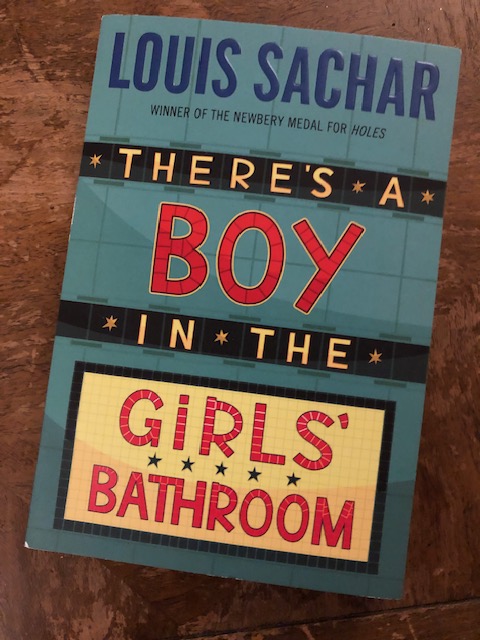
Read Aloud Series, Book 2: There’s a Boy in the Girls’ Bathroom

The title grabs them first. There’s giggling. And then the kids love that there are threats of fighting and torn up assignments, a real Bad Kid is the main character. Then we learn the things that make him quirky and angry and sad and vulnerable. We learn what started it all, years ago. He meets new people, and he starts to change. Or he tries to change. There are challenges and setbacks. He does confusing things. As a class, we talk about it. There is tenderness and redemption and generosity and love. 

I read this second to show the range of one author — Louis Sachar can be silly and profound. I read this because there are so many fun voices to use with these characters. I read this to show that even Bad Kids can change. They are good, too, if given permission and a few chances to change. If they are invited. If we can invite them.  

The Read Aloud Series is a review of the series of books I used to read aloud to my third grade students every year after lunch. The exact order and titles changed somewhat over the years, but these are the ones that were most beloved, both for the kids as listeners and for me as the read aloud reader. Many afternoons our 15-minute read aloud time would stretch into 20, 30, sometimes as long as 45 minutes, as the kids begged to hear more of a story, or we discussed what a character did, or I reread difficult passages, or diagrammed family trees and plot lines for them. I can say that my gift as a teacher was, and still is, my enthusiasm for a good story, and these are the books that have brought me a great deal of joy in sharing with young readers over the years. 

on the process, week of Jan 8-14

back to work, and there is less time to be, or it feels that way. 

at work:  so much creation – of space and tasks and ideas and solutions to problems I never even anticipated arising. 

at work:  so many people, so much energy spent externally, the volume turned up much higher. and that is fine. I do not like to be only alone, only quiet. but it makes hearing the quieter voices, the softer nudges, the gentler pulls, harder to notice and follow. 

everyday presents the choice to choose habit or intention. habit is temptingly easy, intention much harder. 

I am intending to choose intention, even in small things:  quiet until after breakfast; noticing the light changing during the day, how it falls across the floor, then the wall, then away; sweeping the floor and chopping vegetables as meditation and not chores; looking for new beauty in a face I already know; this weekly reflection. 

and I must confess:  this weekly reflection was intended to be about a longer work, a book that started forming four years ago, but it has wandered so far away I’ve had to do dishes in silence and shovel snow in the cold to find a way to invite it back. 

and I must confess again:  I am through the foothills and at the base of the mountain, I think. I know where it will go, the book — if things go well — but I have to start over, nearly. what I thought would be a story told in limited third is asking to be told in first person. so. I have to sift through those pages, bravely, and let them go and move them into something new. again. re-creation. 

so. I intend to make time to sit at a window or at my desk and watch the light change, and also reread pages and smile and say hello and goodbye and hello, to start again. 

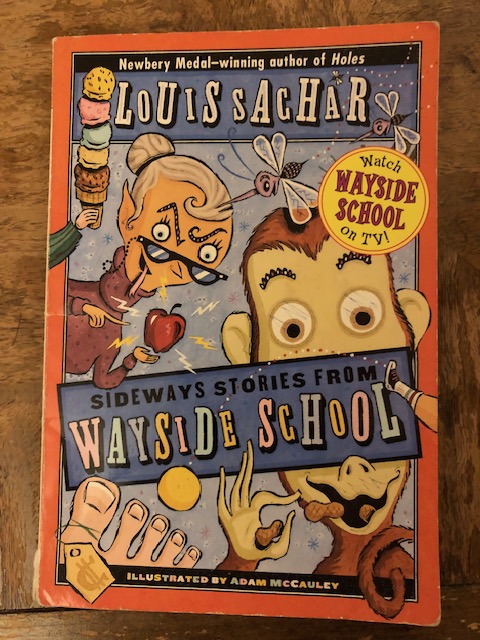
Read Aloud Series:  Book 1, Sideways Stories from Wayside School by Louis Sachar

First book. Twenty minutes after lunch and recess, a time to re-civilize ourselves. Sit and breathe, then ring the chimes three times, then try to settle and manage listening outward while imagining inward. A test. An exercise in patience and, eventually, if I’ve laid enough groundwork, a practice in developing the mind’s eye and also precious sensitivities like compassion and humor and wonder and curiosity at what it means to be a human in a hard world. It’s just stories, they might say. Is it? Stories make worlds. So I start with this first book. It is silly, sometimes absurd. But they love the voices I make and that the mean teacher sees justice (of a sort) and students fall out windows asleep and almost sell their toes and are right about the wrong things. Each character a child with their own uniqueness to offer — just like them.

Short chapters that do a lot of work. They capture and recapture attention page after page. Lots of laughs and silliness, a sign that books and words can be play and not just labors to get through. It does the trick, this book. Placed in the library when completed with the class, I’ve seen it with a front cover falling off and pages bent and fingerprinted with chip dust. Loved and used till it must be replaced. Again and again. And we are a little closer to loving reading and story as much as I do.

The Read Aloud Series is a reflection on the series of books I used to read aloud to my third grade students every year after lunch. The exact order and titles changed somewhat over the years, but these are the ones that were most beloved, both for the kids as listeners and for me as the read-aloud-reader. Many afternoons our 20-minute read aloud time would stretch into 25, 30, a few times even as long as 45 minutes, as the kids begged to hear more of a story, or we discussed what a character did, or I reread difficult passages, or we created family trees and plot diagrams on the board to keep track of it all. I can say that my gift as a teacher was, and still is, my enthusiasm for a good story, and these are the books that have brought me a great deal of joy in sharing with young readers over the years. 

on the process, Jan 1-7

a few things I’ve learned this break: 

no one’s going to ask me to write, or be creative, or try new things

but if something good happens — like winning a contest — people will say they always knew it,

that I had it in me, that they knew I’d do it, that I’d win, etc. etc.

that isn’t to say:  I don’t believe those people. 

that isn’t to say:  those people and their kind attentions aren’t true. 

it is to say the praise is dormant, it needs a reason to surface, 

it will not arrive for no reason, and also

it is inconsequential past the moment of receiving, because the crest falls to trough, 

and there I am again, quiet and sunken and waiting to make more, try again. or not. 

because — remember — no one asks me to write, to create, to try new things

that is up to me, just me.

no one will mourn my empty pages, my echoing time, hours spent lying around, dormant like the praise. 

just me. I will mourn the time, the misses, the quiet echoing quiet, the unwritten, the untried. 

I will know that I could have done, and I didn’t. or that I wouldn’t. 

another thing:  

it doesn’t have to be good, not the first time, not the last time, it just has to be, 

let it go, wings to the wind, so that it can float and go, 

because who knows if it’ll amount to something, it might not,

but it is and it was, and it’s okay if it’s a sketch of an idea, it’s better than no, nothing, none, not.

also: 

sunlight. I need it. 

also: 

a schedule. I need it. 

also: 

movement. I need it. 

also: 

outside everyday, any weather, all weather. I need it. 

also:  I do not want to resent or envy another person for their creativity. it is energy better spent on creation. and it is a signpost, an arrow down the road in the direction I’d like to go. so, rather than a flash of anger, a pit in the gut, it can be a breadcrumb, illuminating the way, a place for my feet, a spot to search. 

and finally:  play. it is not so serious. make the pancake and throw it out. or eat it. just mix the batter and heat the pan. see what happens. 

the looming Chicago teacher strike, part 2

today was the last day of a three-day voting period for rank-and-file members of the CTU to vote on the strike authorization. the union needs at least 75% of members to vote yes to move forward with a strike. that said, this vote is an authorization for strike, so striking is not a sure thing yet, but based on how voting turns out teachers may be one step closer. and while we’re waiting for the final count, let’s look at a few more of the reasons that teachers are revved up and ready to fight.

Issue #4:  Teacher Prep Time

so, I don’t know how many of you know this, but technically teachers are hourly workers. that’s right. every teacher clocks into work in the morning, and they clock out in the afternoon. that said, teachers are paid for 6.25 hours of work per day. lunches are 45 minutes of unpaid, duty-free time.

besides an unpaid lunch, teachers also get 60 minutes a day away from teaching in front of students to complete professional duties including but not limited to:  

  • planning lessons
  • preparing instructional materials
  • grading student work
  • entering grades into an online system
  • analyzing student data
  • communicating with parents, colleagues, and administrators
  • managing student paperwork
  • translating materials (for bilingual teachers)
  • meeting with support staff to discuss students with IEPs and 504 Plans (special education and health-related issues)

this is a lot. and it’s a lot to manage for 25-40 kids. and it’s a lot to manage in 60 minutes a day. and it’s actually NOT 60 minutes a day, but four times a week, because once a week the principal takes the prep hour to meet with teachers. which is fine, we all need time to connect as professionals. however, CPS wants to take away two more hours of teacher preparation time and turn them into additional principal-led hours, leaving teachers with two hours PER WEEK to get all their professional duties done. it’s just not possible. 

imagine:  your job is to be LeVar Burton from Reading Rainbow, and Bill Nye the Science Guy, and like, Miss Frizzle with her magic school bus AND a fun math teacher and also stay on top of emails and grades and keep a neat, attractive classroom and have organized student files, too, in two hours a week. again, it’s just not possible.

well, why not come early, or stay late, or work on the weekends? believe me! teachers already do! but teachers are saying enough is enough. leave the prep time alone.

Issue #5:  PSRPs and Teacher Aides

Paraprofessionals and School-Related Personnel (PSRPs), aka teacher aides, are some of the strongest glue in a school. they most often live in the neighborhood and know the kids and their families, and they are such a key resource for classroom teachers and for the school as a whole. the CTU wants to hire 1,000 more PSRPs, so only one or two more per building. a modest change in each building that can actually lend so much support to teachers in the early grades, teachers of special education students, to provide additional support to larger classrooms, etc. the support opportunities are big. and really, who wouldn’t want a qualified and trained professional available to support their child’s classroom?

Issue #6:  Special Education

special education is an issue with layered demands from the CTU, including hiring more case managers (who manage students with special education needs), hiring more special education teachers, and providing more preparation time for special education and general education teachers to meet and create co-taught lessons.

however, almost the entire opposite is on the table right now, with the district wanting to delete terms from the contract that uphold the federal law mandating that no more than 30% of students in a classroom have special needs. this law is not intended to keep special education students out of the classroom; it’s meant to distribute special education students into a variety of classrooms so they have the chance to interact and learn alongside same-age peers. when a ratio of 30/70 is taken away, special education students are at risk of being taught in classrooms that do not offer the social interaction they need or the educational supports that they deserve.

again, teachers in Chicago are not selfish. they aren’t fighting solely for the pay and benefits. they are pushing for schools that are fully staffed and fully funded. the money is there to fund meaningful changes to our schools. changes that will benefit all stakeholders, like smaller class sizes, social workers and nurses in every building everyday, teachers who are able to prepare lessons and materials, schools with PSRPs to support classrooms, and special education programs that offer appropriate engagement and supports to special education students.

doesn’t that sound like a school system you’d like your child to attend? that’s what teachers are fighting for.

the looming Chicago teacher strike, part 1

what does it have to do with you?

think back to a time when you were at school and things weren’t going your way. were you struggling with pulling up a grade? were you feeling disengaged because you weren’t really learning anything new? were you feeling lonely or left out by friends — who were pretty obviously being mean to you? were you dreading school because of that one kid, or those several kids, who — sure — were funny and joked around a lot in class, but were actually pretty out of control and managed to keep the teacher flustered and everyone else from learning?

as a one-time kid, i’ve experienced all those situations to one extent or another, and i bet you, dear reader, have as well. you may have even felt them more extremely that i did, maybe even failing a class or an entire year and having to repeat a class in summer school — or even repeat a grade. you may have started faking stomach aches or straight up started cutting classes or skipping school altogether to avoid the mean kids or the boredom or the general chaos of school. and who could have helped you pull through all that, if they weren’t already trying? your family and friends, sure, but also the teachers in your life. not all teachers are perfect, and i’m not saying that a teacher would have or could have saved you the discomfort and pain that comes with growing up, but i feel pretty confident that your teachers went into teaching to help their students learn and to support their growth. many times, as with all humans, things just get in the way.

and i’m here to explain that the contract the Chicago Teachers Union is fighting for this fall is one that can help with those things that get in the way, that keep teachers from reaching their students and creating that safe and meaningful school environment.

the contract that teachers are fighting for is one that advocates — no, demands — that the school setting is one that everyone deserves and that as many learning roadblocks are pushed out of the way as possible.

teachers are fighting for what every kid and every teacher in Chicago deserves. let’s take a look.

Issue #1:  Pay & Benefits

at first glance, this may cause some questions. how does a teacher’s salary make a student’s life better? how does that make a student’s experience safer, more comfortable? well, if teachers are worried about how they’re going to pay their rent or mortgage, their student loans, how they’re going to cover the rising cost of living, then how can they come into the classroom ready to lead a group of students through the vibrant process of learning? i don’t know about you, but whenever i’ve been worried about money i’m not my most creative, positive, patient, risk-taking self. and aren’t those the characteristics you want most in a teacher?

also, the school system is running into a staffing shortage, particularly in specialized areas like bilingual education, special education, social workers, and school nurses. one of the best ways to attract high-quality candidates is to offer a competitive — and stable — pay and benefits package.

Issue #2:  Class Size

from the outside looking in it may appear that these first two demands, more pay and less students, is obvious evidence that teachers aren’t demanding this for the betterment of the school system, it’s that they’re trying to make their jobs easier. but to a seasoned teacher, or even a beginner, teachers know that teaching isn’t about pouring facts into a child’s head. teaching is about relationships. the masters among us can, and often do, cultivate relationships with 32, 35, 38 kids per class, but it takes a toll. to listen to all those stories, to think about what books each child might like to read, their language development, ways to build their confidence and push them to grow — that takes a lot out of a person. it’s not impossible, but think about the possibilities if a teacher had only 22, 24, 27 kids in a room. think how much more your favorite teacher could have gotten to know you (happy sigh!), and how many more chances your least favorite could have gotten to see the real you, had there been fewer kids and more time to see you, to listen to you, and to be with you.

that’s where the magic of teaching lies, in the relationships. and teachers need to have less kids in front of them so they have the chance to get to know each child more, build trusting relationships with each child, and at the heart of it, support that child as they learn and grow.

Issue #3:  Staffing

pretty simple. hey if there’s a school library, why not staff it with a full-time librarian? since kids have social-emotional needs — growing up is hard! — then why not staff a school with the recommended number of social workers? how about school counselors? how about school nurses? this demand for full school staffing goes back to creating a safe and comfortable environment where children are able to learn and where they can get the supportive services they need. it’s a no-brainer.

teachers are preparing to use their ultimate weapon — withholding their labor — in order to demand what schools across Chicago need in order to be safe and comfortable learning environments. if a strike is what it will take, then the members of the Chicago Teachers Union are ready.

Self Care in 2019: Balance, Balance, Balance!

Yes, yes, of course. Self care is quite the catch phrase lately, so much so that at this point I feel like its actual meaning has been replaced with a pop culture meaning, which is spend lots of money on things like spa days or brand name items and give yourself permission to ignore other people’s needs in the name of putting yourself first.

I’m not against spa days or buying brand name items, and I’m not against putting ourselves first sometimes, but this pop version of self care is a disguise and a ruse that makes us believe that by spending money or neglecting other people we’ll feel better. And many of us will — but fleetingly — and at what price? The pop version of self care is a hollow way of taking care of yourself.

But in 2019, I’m going to focus a lot more on self care — or simply taking care of myself — and to do that, I am seeking the magic ingredient:  balance. Balance in everything:  my work life, my social life, my home life, my inner life, my health, all of it as much as I can. And it’s going to be hard. Because to be balanced, truly balanced, is nearly impossible.

     Balance is ephemeral, a moment of suspended grace.                                                      It’s not a permanent position, but it’s one worth striving for.

Balance — or an attempt at balance — requires self-awareness, self-forgiveness, optimism, and even a sense of humor. Because I know with my achiever tendencies I’ll want to “Be Balanced” right away and I’ll want to feel like I’m doing it right and making the right decisions all the time. But that’s the beauty — and the difficulty — of balance. There’s no one way to do it, and the path to balance transforms day to day.

One day balance may mean listening to a friend, really listening, with that still attentiveness and no agenda other than to be there. Another day it may mean taking on the center of attention while retelling a hilarious story. One day it may mean pushing myself really hard at a work out and one day it may mean staying home to rest. It may mean working till 9pm on Tuesday and leaving right on time to go out with a friend on Wednesday. It’s tricky. It’s unpredictable. Whatever it is it’s an approach at walking through life, not as a person frozen in perfect balance — whatever that would look like! — but as a living being responding to the world and her own inner voice and doing her best to make adjustments in loving, good humor.