on the process, week of Jan 22-28

so, no writing. but other creativity-related things happened. like eating beautiful meals and dancing to music that rattled the whole building, and going for a swim and thinking. as with the laps, my brain turned on the same thoughts over and over. mostly, I love swimming. I’ve got to do this every Sunday. how do I get Annabelle (my novel’s protagonist) to come to me and tell me her story, in her voice, without it feeling strange? as with all things, I think I’ve just got to start. that will be my goal for this week:  a snappy, 500-word vignette told from Annabelle’s perspective. I feel exposed just saying a small goal like that to more than myself, but I hope we’ll all be kind with how it works itself out. 

I’ve also thought about a couple of submission deadlines. of course, the publications I admire and covet being in the most have closed submission windows, but that’s okay. I didn’t have anything for them to read anyway. however, a couple deadlines for smaller publications are coming up that I think I can do something for, little flash pieces. the one on skin is still in the works, and I have an idea brewing for something else. 

oh, and another piece of evidence that I can work under a deadline, that I can write inside little snippets of time:  I wrote a poem today, a found poem — sometimes known as a blackout poem or an altered page poem. I did it as a way to experience what my creative writing students will experience, to see how long it might take, to imagine how hard they’ll have to think. it was hard. but I did it. so they can do it, too. 

remember loves, the stakes are not that high. just try. just begin. see you next week.

my trial run blackout poem

Read Aloud Series, Book 3: Clementine

Book 3, Clementine

This petite book by Marla Frazee shows that girls can be Bad Kids, too. Clementine is wildly distracted and wildly creative and caring and silly and so youthful and innocent. She is a little bit manic pixie dream girl, but in a mostly harmless and very childlike way. Because Clementine is a child. She makes so many mistakes and is so much herself that through the opening chapters the kids at first are confused by her:  cutting off all her friend’s hair, then her own, then trying to fix it with red permanent marker, eating peas with a toothbrush, naming her pets after cosmetics products. Clementine also deals with loss and longing in a way that gently opens that conversation for the kids. It’s very silly and also disarming and real. 

Clementine creates a way into building curiosity and patience for a character, into experiencing the truth of the narrative before the protagonist does, and then waiting to see when and how she finally catches on. It sheds some light on how to love our friends and family members, even the most maddening ones, with generosity and curiosity. It shows how we can treat a Bad Kid with gentleness and acceptance and humor. Because we all make mistakes, and we have all wished to be embraced for who we are, and not just tolerated.  

The Read Aloud Series is a review of the series of books I used to read aloud to my third grade students every year after lunch. The exact order and titles changed somewhat over the years, but these are the ones that were most beloved, both for the kids as listeners and for me as the read aloud reader. Many afternoons our 15-minute read aloud time would stretch into 20, 30, sometimes as long as 45 minutes, as the kids begged to hear more of a story, or we discussed what a character did, or I reread difficult passages, or diagrammed family trees and plot lines for them. I can say that my gift as a teacher was, and still is, my enthusiasm for a good story, and these are the books that have brought me a great deal of joy in sharing with young readers over the years. 

on the process, week of Jan 15-21

I have not written about Annabelle, but I’ve thought about her. she is stuck, like a bug on pins or flattened between panes of glass. but I see her moving, despite the pressure of pins and glass, and she’s coming back to me. I don’t usually like to use first person in a fictional story, and that’s what’s making me shy to start again, so I will have to allow it and become comfortable with it, because I think that’s what the story calls for. 

I surprised myself by starting a new piece on Sunday — it’s about skin — and I drafted a couple of poems last weekend. it seems disingenuous to report that all these ideas are coming at me so effortlessly and that I’ve just got to open my laptop or grab a pen to catch them all on paper. but it felt a little bit like that with what I started today. maybe having a prompt helps. that’s what I had for the piece on skin. also, I decided to stay away from social media all day. unsurprisingly, it’s the calmest and most content I’ve been in days and days.

the lack of mental static is delicious. I must plan to repeat it, a day away from the online noise.

so we are approaching each other little by little, Annabelle and I. maybe I will force a final push this coming week, one with a prompt and a day without social media. why not? these stories won’t write them selves. 

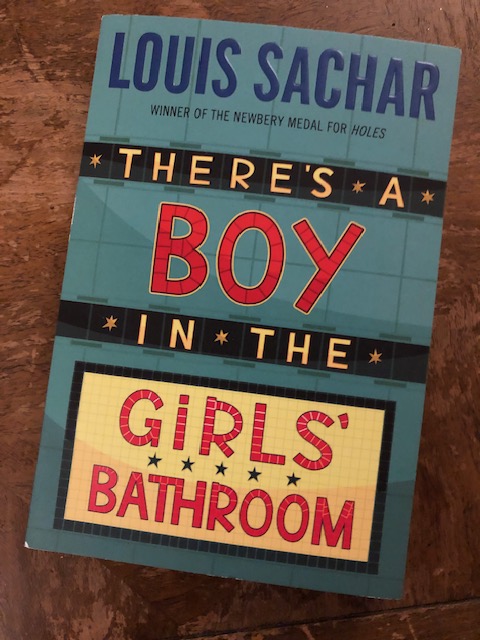
Read Aloud Series, Book 2: There’s a Boy in the Girls’ Bathroom

The title grabs them first. There’s giggling. And then the kids love that there are threats of fighting and torn up assignments, a real Bad Kid is the main character. Then we learn the things that make him quirky and angry and sad and vulnerable. We learn what started it all, years ago. He meets new people, and he starts to change. Or he tries to change. There are challenges and setbacks. He does confusing things. As a class, we talk about it. There is tenderness and redemption and generosity and love. 

I read this second to show the range of one author — Louis Sachar can be silly and profound. I read this because there are so many fun voices to use with these characters. I read this to show that even Bad Kids can change. They are good, too, if given permission and a few chances to change. If they are invited. If we can invite them.  

The Read Aloud Series is a review of the series of books I used to read aloud to my third grade students every year after lunch. The exact order and titles changed somewhat over the years, but these are the ones that were most beloved, both for the kids as listeners and for me as the read aloud reader. Many afternoons our 15-minute read aloud time would stretch into 20, 30, sometimes as long as 45 minutes, as the kids begged to hear more of a story, or we discussed what a character did, or I reread difficult passages, or diagrammed family trees and plot lines for them. I can say that my gift as a teacher was, and still is, my enthusiasm for a good story, and these are the books that have brought me a great deal of joy in sharing with young readers over the years. 

on the process, week of Jan 8-14

back to work, and there is less time to be, or it feels that way. 

at work:  so much creation – of space and tasks and ideas and solutions to problems I never even anticipated arising. 

at work:  so many people, so much energy spent externally, the volume turned up much higher. and that is fine. I do not like to be only alone, only quiet. but it makes hearing the quieter voices, the softer nudges, the gentler pulls, harder to notice and follow. 

everyday presents the choice to choose habit or intention. habit is temptingly easy, intention much harder. 

I am intending to choose intention, even in small things:  quiet until after breakfast; noticing the light changing during the day, how it falls across the floor, then the wall, then away; sweeping the floor and chopping vegetables as meditation and not chores; looking for new beauty in a face I already know; this weekly reflection. 

and I must confess:  this weekly reflection was intended to be about a longer work, a book that started forming four years ago, but it has wandered so far away I’ve had to do dishes in silence and shovel snow in the cold to find a way to invite it back. 

and I must confess again:  I am through the foothills and at the base of the mountain, I think. I know where it will go, the book — if things go well — but I have to start over, nearly. what I thought would be a story told in limited third is asking to be told in first person. so. I have to sift through those pages, bravely, and let them go and move them into something new. again. re-creation. 

so. I intend to make time to sit at a window or at my desk and watch the light change, and also reread pages and smile and say hello and goodbye and hello, to start again. 

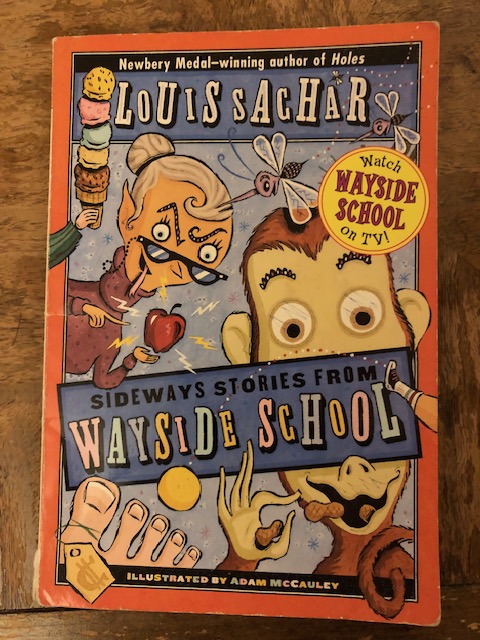
Read Aloud Series:  Book 1, Sideways Stories from Wayside School by Louis Sachar

First book. Twenty minutes after lunch and recess, a time to re-civilize ourselves. Sit and breathe, then ring the chimes three times, then try to settle and manage listening outward while imagining inward. A test. An exercise in patience and, eventually, if I’ve laid enough groundwork, a practice in developing the mind’s eye and also precious sensitivities like compassion and humor and wonder and curiosity at what it means to be a human in a hard world. It’s just stories, they might say. Is it? Stories make worlds. So I start with this first book. It is silly, sometimes absurd. But they love the voices I make and that the mean teacher sees justice (of a sort) and students fall out windows asleep and almost sell their toes and are right about the wrong things. Each character a child with their own uniqueness to offer — just like them.

Short chapters that do a lot of work. They capture and recapture attention page after page. Lots of laughs and silliness, a sign that books and words can be play and not just labors to get through. It does the trick, this book. Placed in the library when completed with the class, I’ve seen it with a front cover falling off and pages bent and fingerprinted with chip dust. Loved and used till it must be replaced. Again and again. And we are a little closer to loving reading and story as much as I do.

The Read Aloud Series is a reflection on the series of books I used to read aloud to my third grade students every year after lunch. The exact order and titles changed somewhat over the years, but these are the ones that were most beloved, both for the kids as listeners and for me as the read-aloud-reader. Many afternoons our 20-minute read aloud time would stretch into 25, 30, a few times even as long as 45 minutes, as the kids begged to hear more of a story, or we discussed what a character did, or I reread difficult passages, or we created family trees and plot diagrams on the board to keep track of it all. I can say that my gift as a teacher was, and still is, my enthusiasm for a good story, and these are the books that have brought me a great deal of joy in sharing with young readers over the years. 

on the process, Jan 1-7

a few things I’ve learned this break: 

no one’s going to ask me to write, or be creative, or try new things

but if something good happens — like winning a contest — people will say they always knew it,

that I had it in me, that they knew I’d do it, that I’d win, etc. etc.

that isn’t to say:  I don’t believe those people. 

that isn’t to say:  those people and their kind attentions aren’t true. 

it is to say the praise is dormant, it needs a reason to surface, 

it will not arrive for no reason, and also

it is inconsequential past the moment of receiving, because the crest falls to trough, 

and there I am again, quiet and sunken and waiting to make more, try again. or not. 

because — remember — no one asks me to write, to create, to try new things

that is up to me, just me.

no one will mourn my empty pages, my echoing time, hours spent lying around, dormant like the praise. 

just me. I will mourn the time, the misses, the quiet echoing quiet, the unwritten, the untried. 

I will know that I could have done, and I didn’t. or that I wouldn’t. 

another thing:  

it doesn’t have to be good, not the first time, not the last time, it just has to be, 

let it go, wings to the wind, so that it can float and go, 

because who knows if it’ll amount to something, it might not,

but it is and it was, and it’s okay if it’s a sketch of an idea, it’s better than no, nothing, none, not.

also: 

sunlight. I need it. 

also: 

a schedule. I need it. 

also: 

movement. I need it. 

also: 

outside everyday, any weather, all weather. I need it. 

also:  I do not want to resent or envy another person for their creativity. it is energy better spent on creation. and it is a signpost, an arrow down the road in the direction I’d like to go. so, rather than a flash of anger, a pit in the gut, it can be a breadcrumb, illuminating the way, a place for my feet, a spot to search. 

and finally:  play. it is not so serious. make the pancake and throw it out. or eat it. just mix the batter and heat the pan. see what happens.